Morning thoughts (11): The plot thickens

Sir Alan ‘Tommy’ Lascelles

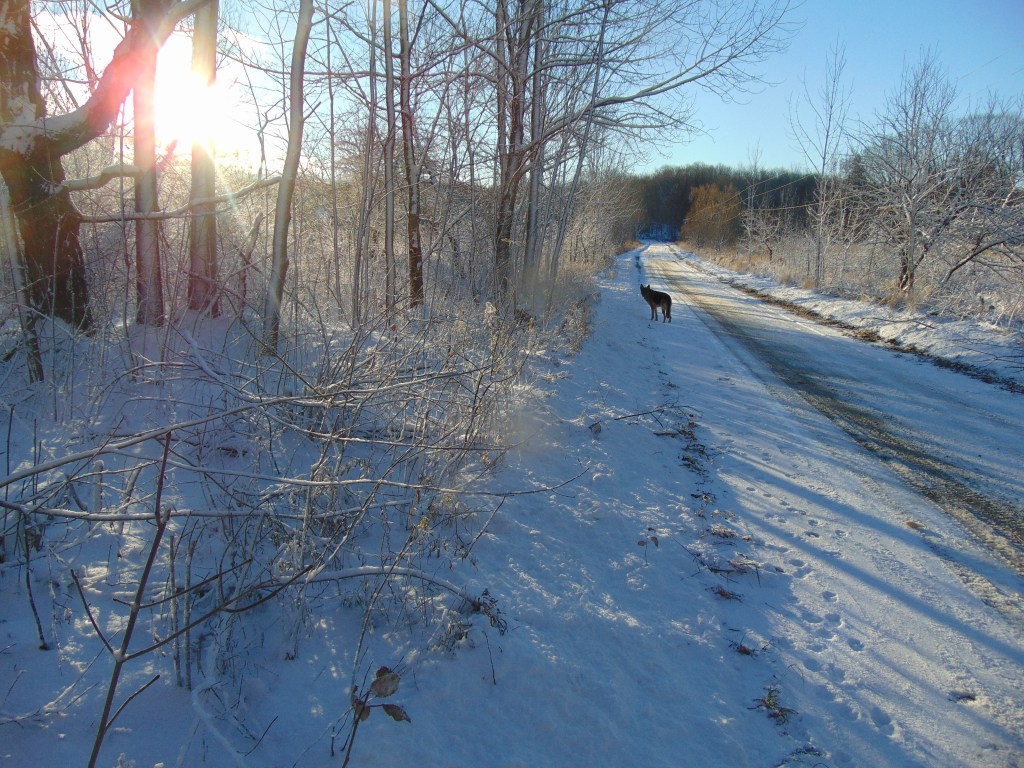
Finding a good book, or books, to read is one way to survive these frigid January days of a Canadian winter. The one I recently purchased on-line has been thought-provoking, enough to distract from the bitter cold as we, the dogs and I, took our morning walk down Cathedral Drive.

I should clarify, the dogs went about their usual busy-ness of sniffing out whatever creatures had been about during the night, and so on. I was the one distracted with thoughts about what I had been reading in King’s Counsellor, Abdication and War: The Diaries of Sir Alan ‘Tommy’ Lascelles. That name may ring a bell for the millions who have watched the Netflix series, The Crown, a dramatic rendering, not necessarily totally accurate, about the ongoing reign of Queen Elizabeth II.
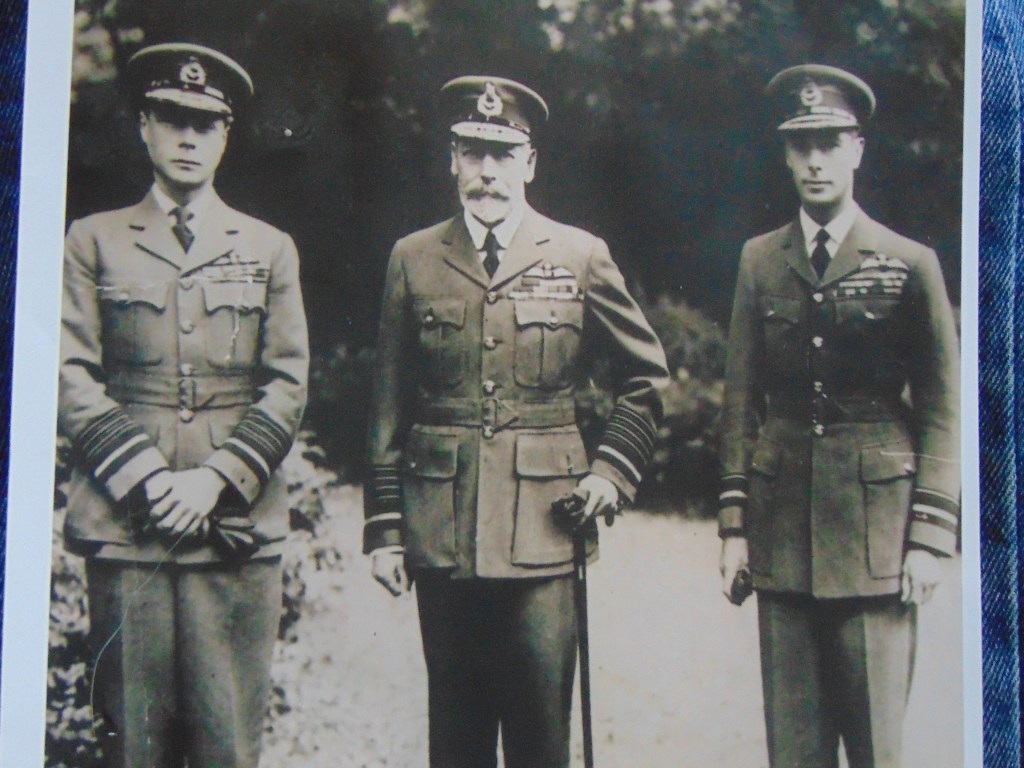
Three Kings: L-R, Edward VIII, George V, George VI

I was especially interested in the early episodes focusing on the abdication of Edward VIII in December, 1936, less than a year after becoming King upon the death of his father George V. After ascending to the throne, Edward, formerly Prince of Wales, had hoped to marry his lover, Wallis Simpson, when she obtained a divorce from her husband, Ernest Simpson. But the ensuing constitutional crisis went against him, leading to his abdication. His brother, Albert (Bertie to his family and friends) the Duke of York, became King, as George VI. As a result, his daughter, Elizabeth, now Elizabeth II, became heir presumptive, or first-in-line to the throne. Edward got a new title, Duke of Windsor. Wallis did get a divorce and they married, in France, months later, making Wallis Duchess of Windsor, but not welcome as part of the Royal Family.

In the midst of all that, to a significant and influential degree only fully revealed in recent years, was Alan ‘Tommy’ Lascelles. The grandson of Henry Lascelles, the 4th Earl of Harewood, Lascelles initially struggled to find suitable employment as a young man after graduating from Oxford University, and twice failing the Foreign Office exam for a possible diplomatic career. He served as an officer in the First World War, earning the Military Cross, after being wounded in action. Crucially, for future events, he became Assistant Private Secretary to Edward, then Prince of Wales, in 1920. Initially, he was impressed by the young prince, already a world-famous celebrity who travelled the British Empire and Commonwealth extensively. Edward visited Canada twice formally in the 1920s and liked the country so much he bought a ranch in Alberta.

But Lascelles’ attitude toward Edward changed drastically, mainly because of the lack of moral character he had observed time after time in Edward’s behavior. He finally resigned his position in disgust, in 1929, despite being a married man with a young family to support, and no immediate job prospect.

“Tommy came to regard (Edward, Prince of Wales) as hopelessly selfish and irresponsible, and quite unfit for his future role as Sovereign. So disgusted was he with the Prince’s behaviour that in January, 1929, he resigned,” Duff Hart-Davis, the editor of King’s Counsellor, wrote in an introduction to the book.

Also of interest to me, though not included in The Crown, is the fact Lascelles became Secretary to the Governor-General of Canada, Vere Ponsonby, the 9th Earl of Bessborough, in 1931, serving until 1935. If the reader is curious about the reason why I’m interested, I refer them to this link.

In late 1935 Lascelles was offered the position of Assistant Private Secretary to King George V. He was reluctant to accept because as Prince of Wales, Edward would immediately become King when his aging father died. However, assured by Royal officials that the King was in good health and likely to reign for at least another seven years, he accepted the position. But as fate would have it, George V died within a few months, and Lascelles again became Edward’s (as King Edward VIII) assistant private secretary, until he abdicated. Then, Lascelles served in that position for George VI, before being promoted to Private Secretary. He was knighted by the King during a successful Royal tour of Canada in 1939, which Lascelles helped organize. He remained Private Secretary during the first year of Elizabeth II reign, starting in 1952, until he retired in 1953. Sir Alan ‘Tommy’ Lascelles died August 10, 1981, at Kensington Palace, at the age of 94.

His close connection with Edward through his several titles and manifestations is one of the great ironies of Lascelles’ long life and career in Royal service. His character as depicted in The Crown is that of a stern, ‘stuffed shirt’ of a man with an unpleasant personality, rather shallow, and lacking in sensitivity. Despite, how little I knew of Lascelles, except intuitively, I sensed the depiction was not accurate. My reading of his own words as recorded in his daily journal, letters and other documents confirm my sense of who he really was: thoughtful, sensitive, a good judge of character, and with a timely sense of humor to lighten a too-serious moment when needed in conversation or conference. It is noteworthy that he and King George VI were on exceptionally good terms, the king, who suffered from a speech impediment, being especially grateful for Lascelles’ “encouraging” attitude.

However, King’s Counselor, also reveals Lascelles as a man of his times, and perhaps his particular culture, in a disturbing way. In 1947, in the midst of a Royal Tour to The Union of South Africa, in a letter to his wife Joan back in England, he describes a “country of supreme beauty” where he might be “quite glad to live … if only it wasn’t for the blacks” who greatly outnumber “whites.”

Also, in journal entries near the end of the Second Worlds War, his lack of empathy for the countless victims of massive Allied bombing of German and Japanese cities was more than disturbing: it showed the extent to which war can bring out the worst, even in basically good people. Lascelles’ journal entries themselves stopped after the war ended. I hope he found it in him to feel differently about those attitudes.
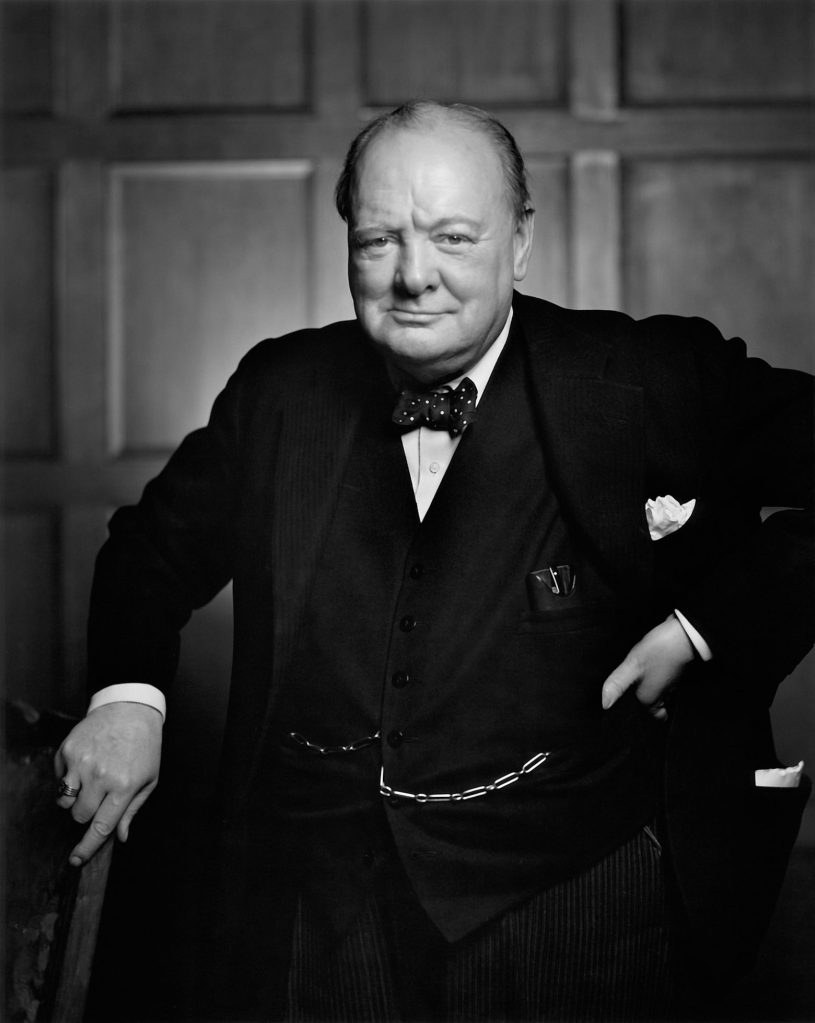
Winston Churchill

The moment I found most touching in King’s Counselor was what Lascelles wrote in a letter to a friend dated January 30, 1965. He had just attended Winston Churchill’s funeral service which he called “deeply moving,” adding, “I cried a good deal. I was very fond of the old man, who was, for many years, abundantly kind to me. And I am more sure than I am of future life that, but for him, I should not be sitting here a free man.”

King’s Counselor is the most recent of a series of several books based on Lascelles’ journal and other papers stored in the Royal Archives. As Hart-Davis, the editor of the books notes, Archive officials were stubbornly reluctant to permit publication of certain documents for the second book, In Royal Service, published in 1989, which included an earlier period of Lascelles’ royal service; but it did not include a “devastating retrospective assessment of the Prince’s character and behaviour,” Hart-Davis wrote in an introduction to the 2020 edition of King’s Counsellor. Both that edition, and the earlier 2006 edition of the same book contain that revealing document, which corrected errors in the previous historic record.

For example, Lascelles shot down the prevailing sentiment that Edward, “a lonely bachelor, ‘fell deeply in love’ for the first time in his life with the soulmate for whom he had long been waiting.” Lascelles called that “moonshine,” adding, “he was never out of the thrall of one female after another. There was always a grande affaire and, coincidentally, as I know to my cost, an unbroken series of petites affaires, contracted and consummated in whatever highways and byways of the Empire he was traversing at the moment.”

I will say I found that interesting as well: apparent proof that it was entirely possible Edward, Prince of Wales, before he became Edward VIII, and then the Duke of Windsor, left inconvenient, illegitimate children behind him as he travelled the Empire; one in particular, and under circumstances that cast a long shadow to this day.
Morning thoughts (10): Being human at our best

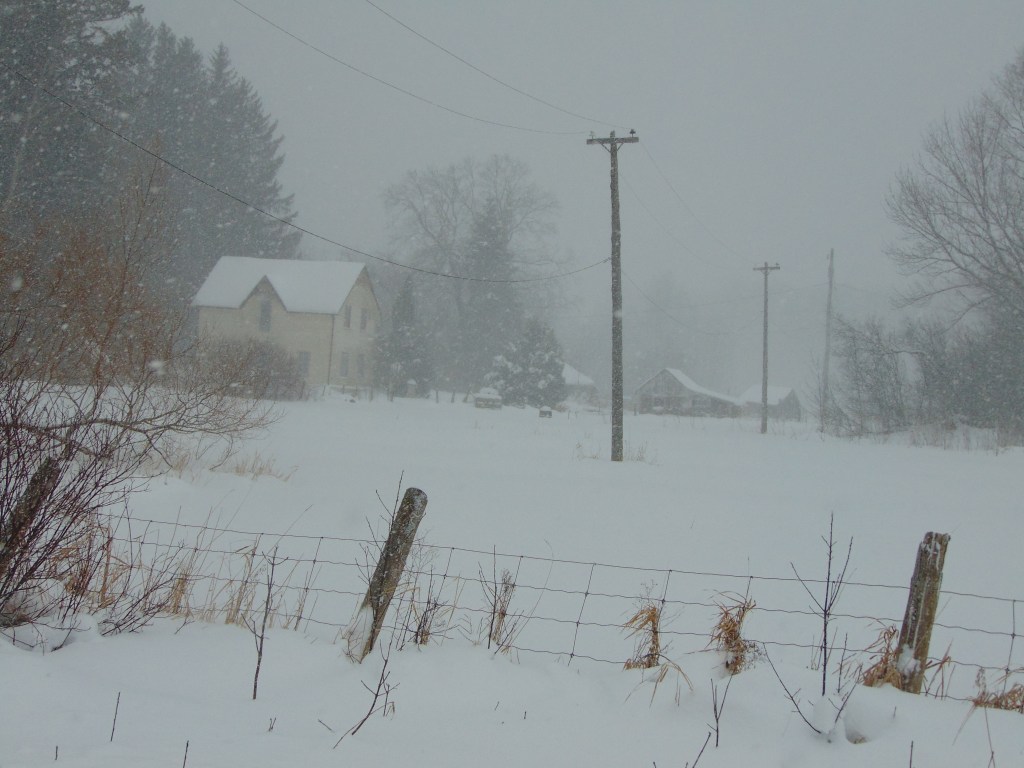
Yes, indeed, the snow was coming down heavily when the propane truck showed up early this morning. And none too soon either: the tanks were getting low, and to be on the safe side, I had turned the thermostat down to 60.

So it was, with a certain level of relief I saw the truck coming down Cathedral Drive as I put a blue box full of recyclables at the end of my long driveway, after spending a frigid hour or so blowing it out with the tractor-and-snowblower attachment.

The truck driver was a cheerful young man, talking about the weather, as Canadians are famous world-wide for doing obsessively. (That must be why I’m writing this now, eh?).

He said the last time he had delivered propane to my place earlier, in the late fall, it also had been snowing heavy on Cathedral Drive. “A winter wonderland, eh,” he said cheerfully as he started to pull the long, black hose around to the side of the house where the propane tanks are located. Inside, the dogs were barking excitedly as they always do when the propane truck arrives, or for that matter, anybody or anything.

I decided to keep the tractor block-heater plugged in because, the way the snow was coming down, I’d likely have to blow the driveway again. That’s one of the essentials of getting through a Canadian winter:  you have to keep on top of it, whether it be clearing the driveway, shoveling snow off the roof, or making sure the tractor essentials have been looked after: motor oil, antifreeze, gear and hydraulic fluid, battery charging okay, and especially, the block heater working well. Any one of those things neglected, and many others not mentioned, and winter will make you pay the price.

The other thing about winter is it demands you re-arrange your priorities, like, in my case, keeping up on the news is relegated to second place.

Still, I find it hard to imagine how people can live without up-to-date news about what’s going on in the world, especially if it’s something that has the clear risk of being able to create catastrophic chaos. And when I say that I immediately think of the world my three grown daughters, and my many grandchildren may inherit.

In the almost four-score years I have been on this planet, I have never seen such troubling times. At the top of the list of those worrisome troubles is the ongoing crisis south of the border. Make no mistake, the future of Canada, as well as the rest of the world, and the U.S. itself, hangs in the balance depending on what happens there. This new year, 2022, will see it go one way or the other: the survival of American democracy, or a virtual authoritarian regime, even an actual civil war. There’s a virtual one already.

Meanwhile, the Covid pandemic has come back with a vengeance because of the omicron variant, after seeming to be on the wane last summer. It threatens to aggravate the socio-political problems in the U.S. Inevitably, the administration of President Joe Biden, already showing signs of strain, will be blamed if the situation doesn’t change for the better. Talk about a ‘perfect storm.’

And if 2021 didn’t provide enough evidence that climate change is real and closing in on catastrophic consequences – think 50-degree summer temperatures, and -50 winter temperatures in western Canada, for just one example – then I don’t know what more evidence will.

What is the matter with us, we human beings? As Shakespeare had the character, Puck, say in A Midsummer Night’s Dream, “What fools these mortals be.”

All that being said – and much left unsaid – I am compelled to dig down deep and come up with hope, that most positive quality of human nature:

We have it in our power, in the ‘better angels’ of who we are, to change things for the much better. Once our most prehistoric, human ancestors, facing a life-threatening, environmental catastrophe, got together and went in search of a way, and a place to survive and go on living. It was a long and hard journey. It took many years, perhaps many generations. Everyone had a role to play, everyone worked together. They learned out of existential necessity how to be a supportive, peaceful community; otherwise, they would not have survived. Sometimes they laughed, often they cried; they learned how to sing and dance to help keep up their spirits; they created and made tools; they fought off predators by outsmarting them. And they no doubt also prayed to the Great Mystery for strength, inspiration, and guidance.

And they succeeded. And so have human beings succeeded many times in accomplishing all manner of great, good things. That’s who we are at our best: intelligent, individually and collectively, and multi-talented, problem solvers.

Nothing is impossible.

Morning thoughts (9): doing what comes natural in the garden

The garden at rest, January 2, 2022

No sooner has the New Year arrived than thoughts about gardening come up like newly-sprouted seeds. Never mind how many times I told myself last summer, as I got down daily on my hands and knees to pull weeds, that I was going to cut back on the size of the garden next season: the seed catalogues have arrived, and this old heart yearns for spring.

So, then why, when I look out the kitchen window, do I smile at the sight of snow starting to fall, with more to come every day this week? Because, on our morning walk, as the dogs and I passed the front garden where I planted numerous rows of garlic last fall, I heard them say, we’re cold. The garlic, I mean.

Okay, I know that’s a tad imaginative, maybe more. But as I approach four-score years of being on this precious little planet I feel like I’m entitled to some flights of fancy. Besides, if there’s one or two things I’ve learned in recent years, anything is possible, both good, and not. But let’s say a prayer for ‘good’ in 2022. It is sorely needed.

The reason why I’m happy to see snow is because an extra layer of insulation is good for the wintering garlic. Yes, it’s winter-hardy, remarkably so, but there is a limit. I follow ‘the book’ on garlic when, after planting, I covered the rows with plenty of fresh, clean wheat straw. That straw is now largely exposed, amid what’s left of the mid-December snow that mostly melted after the unseasonably mild weather that followed. But the temperature fell to -14 Celsius last night, and the sooner the garlic gets a fresh layer of snow-insulation, the better.

And then there’s also the expanded strawberry patch, with six rows of strawberry runner-plants transplanted last September. Some will say spring is better for transplanting; but over the years, I’ve had good luck with early fall. Strawberries also overwinter well, with the help of a good layer of straw insulation. Even so, I’ll be happy to see the snow come for their sake as well.

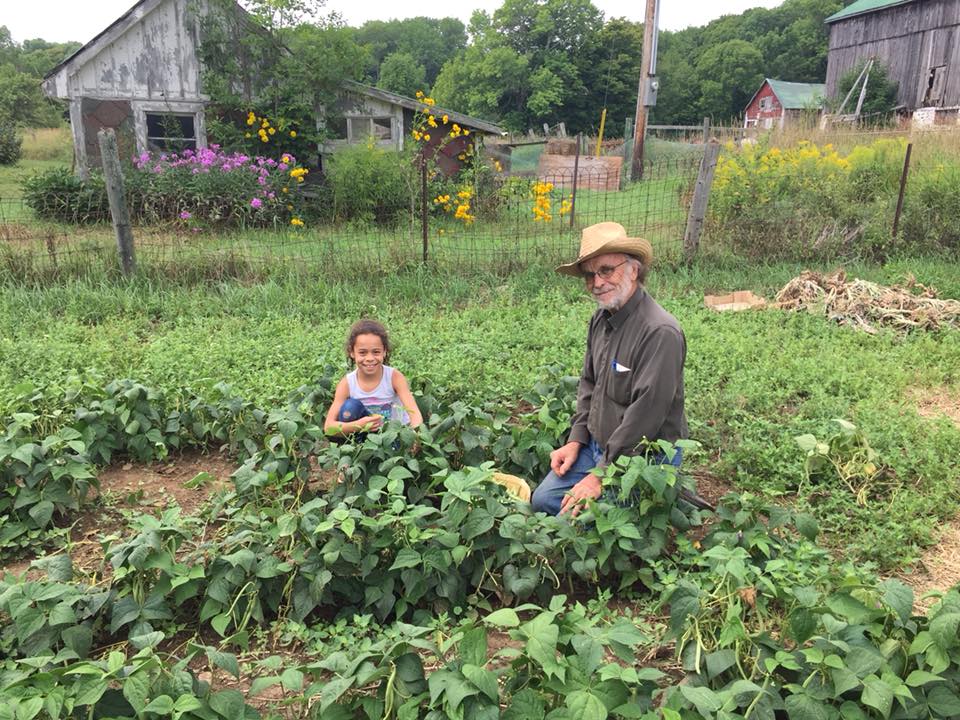
Jorden and Grandpa, and friends, in the garden

Those who love gardening will understand how one develops a personal relationship with plants. I suppose it’s best described as a matter of faith: the idea that good feelings are expressed, and exchanged back and forth; and that, I swear, is beneficial to the growth of a healthy garden. That and the good, old routine of the gardener’s hard work.

This seems like a good place to say, I don’t and never will use herbicide, including and especially those containing the active ingredient Glyphosate, with the main one being the first, Monsanto’s Round-up. Such herbicides are now used in vast quantities around the world in large-scale commercial farming; to the extent that it’s hard to buy food free of glyphosate residue. I daresay that’s one of the reasons why grow-your-own gardening is booming. Those of us who have the land to do that are indeed fortunate, especially if that land is as far away as possible from areas of extensive, cash-crop farming because of the risk of glyphosate-spray drift.

Yes, I hoe and pull weeds, hopefully before they go to seed; and thus, I kill plants. Some will compose and add organic matter to the soil. Some, like twitch grass, the farmer/gardeners’ worst nightmare, are better burned. But the whole idea of spraying chemicals on the field or the garden before planting or emergence, and thus leaving glyphosate residue in the soil for any amount of time, strikes me as utterly unnatural. Worst of all is spraying herbicide just before harvest, to stop the plant from growing and to begin the drying process. That’s called ‘staging.’ How can that be good, when the fact is glyphosate residue remains in many of the foods people eat? Canadian government food-safety regulators say the levels are not high enough to pose a threat to human health. But do you really want to eat Glyphosate?

Anyway, after that bit of drumbeating about my glyphosate obsession, bon chance with your garden in 2022. And may the love be with you.

A view of the garden, early summer a few years ago. Many rows of potatoes, onions and kale.