“This boy is Ignorance. This girl is Want. Beware them both, and all of their degree, but most of all beware this boy, for on his brow I see that written which is Doom, unless the writing be erased.” — Charles Dickens, A Christmas Carol.
I was talking some years ago to young friends, a well-read, pleasant couple with hope in their hearts, about the state of the world. We settled for a while into a discussion about the troubling, political situation in the U.S. where exploitation of a significant portion of the population by a populist demagogue with dangerous dictatorial tendencies is leading that great country, and the world, down a dangerous path.
Suddenly, as often happens, a recollection of a memory that seemed relevant to the discussion came to my mind. In this case, it was a scene from the 1951, British made movie, A Christmas Carol, based on the short story of that title by the great 19th Century English writer, Charles Dickens. Continue reading →
Sleep that knits up the ravelled sleeve of care, The death of each day’s life, sore labor’s bath, Balm of hurt minds, great nature’s second course, Chief nourisher in life’s feast.
(Macbeth, Act 2 Scene 2)
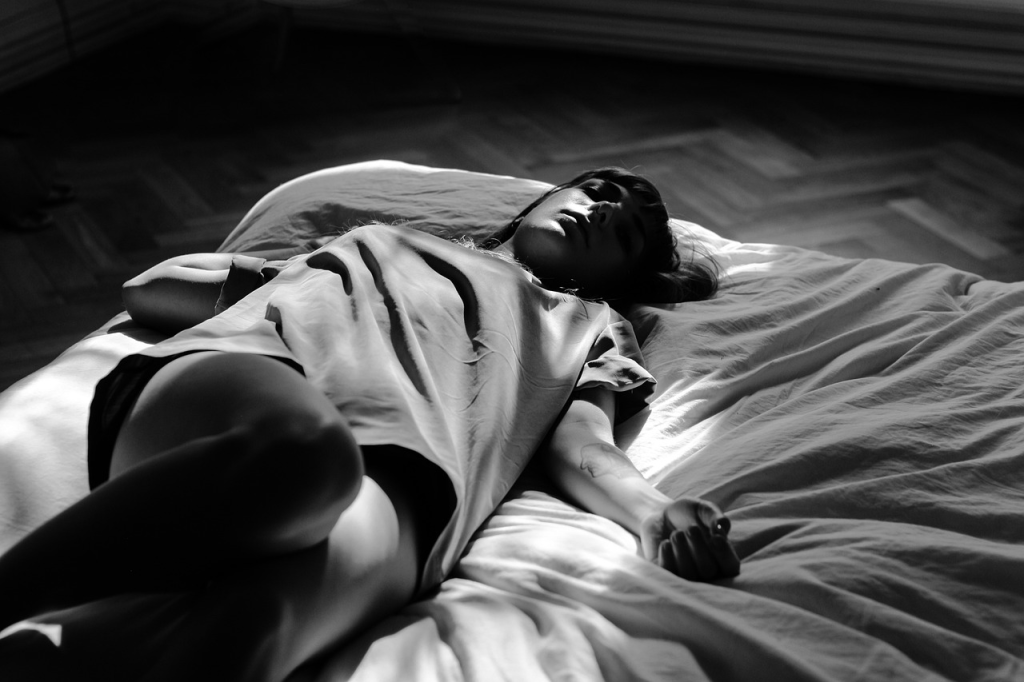
Recent studies of Obstructive Sleep Apnea (OSA), one of the world’s most common human medical conditions, should raise alarm bells among the millions of people diagnosed with the condition, and the many millions more in the world who have symptoms but are not diagnosed. Untreated, sleep apnea can kill, and it can cause dementia.
As a person with OSA myself, the biggest recent medical research breakthrough is a study, published in the medical journal, SLEEP Advances, October 22 of this year. that confirms OSA causes Alzheimer’s disease and other forms of dementia in adults aged 60 to 84.
Women with known or suspected sleep apnea were more likely than men to have symptoms or a diagnosis of dementia at every age level. The study uncovered that by examining survey and cognitive screening data from more than 18,500 adults to determine the potential effect of known or suspected obstructive sleep apnea on the risk for dementia.
For all adults aged 50 and older, having known obstructive sleep apnea or its symptoms – as people often do not know they have the problem – was associated with a higher chance of having signs or diagnosis of dementia in coming years.
I was first diagnosed with mild sleep apnea in 2007 after an overnight sleep test in Owen Sound. I was not recommended for a CPAP (continuous positive airway pressure) machine. But another sleep test about five years ago led to a diagnosis of severe sleep apnea, and a prescription for CPAP. That’s been a struggle to get used to, and way too many times I took risks by not using the machine.
The full face CPAP mask. Think lifesaver.
Earlier this year I purchased and began using a personal oximeter device to track blood-oxygen percentage level during sleep, with and without a CPAP machine. That small device has helped me understand the critical importance of blood-oxygen percentage levels, with the help of online information. I often find the Cleveland Clinic’s blood oxygen pages helpful.
Health Link BC has a clear and precise public explanation online of sleep apnea:
“Sleep apnea means that breathing stops for short periods during sleep. When you stop breathing or have reduced airflow into your lungs during sleep, you don’t sleep well, and you can be very tired during the day. The oxygen levels in your blood may go down, and carbon dioxide levels go up. It may lead to other problems, such as high blood pressure and heart disease.
“Sleep apnea can range from mild to severe, based on how often breathing stops during sleep. For adults, breathing may stop as few as 5 times an hour (mild apnea) to 30 or more times an hour (severe apnea).
“Obstructive sleep apnea is the most common type. This most often occurs because your airways are blocked or partly blocked. Central sleep apnea is less common. It happens when the brain has trouble controlling breathing. Some people have both types. That’s called complex sleep apnea.”
It’s important to add here that qualified medical providers should be consulted for expert treatment and advice.
There is a level at which the lack of oxygen can damage the brain and other organs.
I will say, it was a slap-in-the-face wake-up call one morning when the oximeter showed my blood-oxygen level had fallen to the low 80s percentages overnight when I had stopped using the CPAP machine because of the discomfort. I vowed then to use it religiously. I was not surprised when a few days later I coincidentally saw news about the study that confirmed sleep apnea causes dementia.
In 2023, in the U.S. the Count on Sleep partnership, a collaboration of several professional and patient-focused organizations, was set up to provide “an in-depth analysis of the symptoms, risk factors, prevalence, and burden” of OSA. The National Indicator Report found it affects nearly 30 million Americans, but estimated 23.5 million cases were undiagnosed. In an online public release, The American Academy of Sleep Medicine said “Untreated sleep apnea can lead to serious health consequences including disease, stroke, diabetes, and depression. (And now dementia can be added to that list). The Academy added the cost of undiagnosed OSA in the U.S. amounts to $149.6 billion annually “due to greater health care utilization, increased motor vehicle and workplace accidents, and reduced productivity.
“There are many barriers to sleep apnea diagnosis and treatment including insufficient awareness among the public and health care professionals. Health care professionals should recognize and address the signs of sleep apnea, and people who think they may have undiagnosed sleep apnea should talk to their doctor about their sleep,” the Academy said.
I thank my lucky stars I am a Canadian and that a modest income did not stop me from seeking medical help. The cost of overnight sleep tests, family and specialist physician consultation, and ongoing treatment equipment likely accounts for many of the six million people in the U.S. with undiagnosed sleep apnea. Yet even in Canada the available data indicates most people with the condition remain undiagnosed.
Canada’s Public Health Agency has not updated its information since 2013. A 2009 document, ‘What is the Impact of Sleep Apnea on Canadians,’ is still being used online. It says, “An estimated 858,900 (3%) Canadian adults 18 years and older reported being told by a health professional that they have sleep apnea. In addition to those who reported being diagnosed with sleep apnea, over 1 in 4 (26%) adults reported symptoms and risk factors that are associated with a high risk of having or developing (OSA).”
Sleep apnea has been called a “hidden health crisis.” That was certainly true when in 2019 a team of experts set out to study the worldwide sleep apnea problem. It found only 16 countries had “reliable prevalence data.” Using that data, and comparing countries with similar population and locations, they estimated 936 million adults aged 30 to 69 had mild to severe OSA, and 425 million with moderate to severe. The number of affected individuals was highest in China, followed by the USA, Brazil, and India. The study was financed by Resmed, one of the world’s largest makers of CPAP machines and other sleep apnea treatment products. It was published in The Lancet medical journal.
Do people who have sleep apnea die in their sleep because they’re breathing does not start again? It is said by many online sources to be uncommon. But the well-studied fact that people with undiagnosed sleep apnea especially will develop many other life-threatening conditions, like heart disease is well documented and studied. As the American Lung Association says, “There are serious potential consequences to undiagnosed or untreated sleep apnea. Besides making sleep difficult, it can lead to high blood pressure, heart disease, stroke, diabetes, dementia and result in early death.”
As far back as 2008 studies have shown people with sleep apnea and other sleep-disordered breathing problems were much more likely to die of ‘all causes,’ including cardiovascular mortality risks, especially if their breathing problems were undiagnosed.
My advice as someone with sleep apnea, if you are diagnosed, don’t give up on the CPAP machine: your brain, heart and life depend on it. And if you’re not diagnosed, but have symptoms, don’t delay: seek medical attention as soon as possible.
I am reminded this morning of something my late mother told me more than once, about when she and her grandmother (adoptive mother) went for a long walk one day in their west Toronto area when Mom, born in 1920, was still a young girl. They saw a sign on the gate of a large industrial company, Dominion Bridge. The sign said the company was hiring; but it also said, “Scots and Irish need not apply,” as my mother recalled.
By that time, Scots and Irish, made up the largest ethnic groups in Toronto, and most were second or third generations sons and daughters of immigrants, many of them Scots-Irish from Ulster, or Northern Ireland. Yet still, vestiges of the Anglo establishment of the 19th Century, clung to their sense of cultural and political superiority. Unfortunately, such is the experience and fate of every wave of new immigration. Yet, many of them in turn show the same unwelcoming attitude toward the next waves of immigrants.
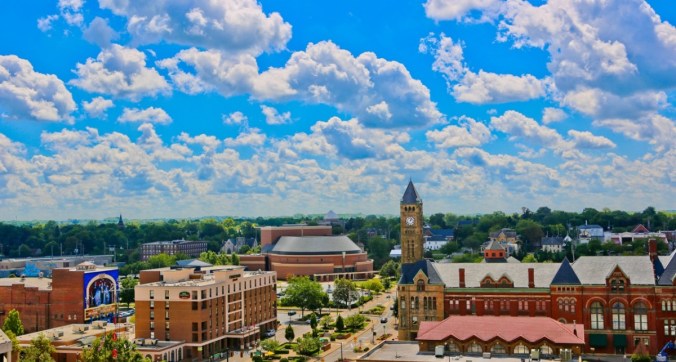
What’s happening now in Springfield, Ohio, USA, is typical. Meanwhile, there have always been low-life politicians who take unprincipled advantage; but not to the terribly tragic extent now taking place in the context of the U.S. Presidential election. It is not only the fate of the world’s once-greatest democracy at stake: the whole world is ‘on the edge.’
The morning sunrise was shining bright as my dogs and I took our morning walk down Cathedral Drive to the broken remains of my touchstone beside the roadway, at the edge of the woods. I noted again how much of the multi-million-year old igneous rock must have been buried there for thousands years after being left behind by the melting glaciers of the last ice age.
But this morning, with the somewhat delayed spring of 2024 finally taking hold, something else caught my eye: leaves of a vine-like plant growing out of what was left of the moss that had covered the above-ground rock. And then nearby, the prolific spring flower I identify as ‘Dutchmen’s breeches’ gathering around the broken rock. And no sooner did I look, then a small gust of gentle morning wind caught a clump of them as if to draw my attention. I know, I know, that may simply be my fancy – but nevertheless, that’s what it seemed.
And, yes, I may be carried away in calling what I saw “small miracles.” After all a miracle, some might critically say, should be of much greater import: the Creator’s hand reaching down to save one life or many from death, or relief from their suffering.
After all, isn’t that what life can do? Not give up easily, but persist, stubbornly to go on living, to find way in the most unlikely places to create new life.
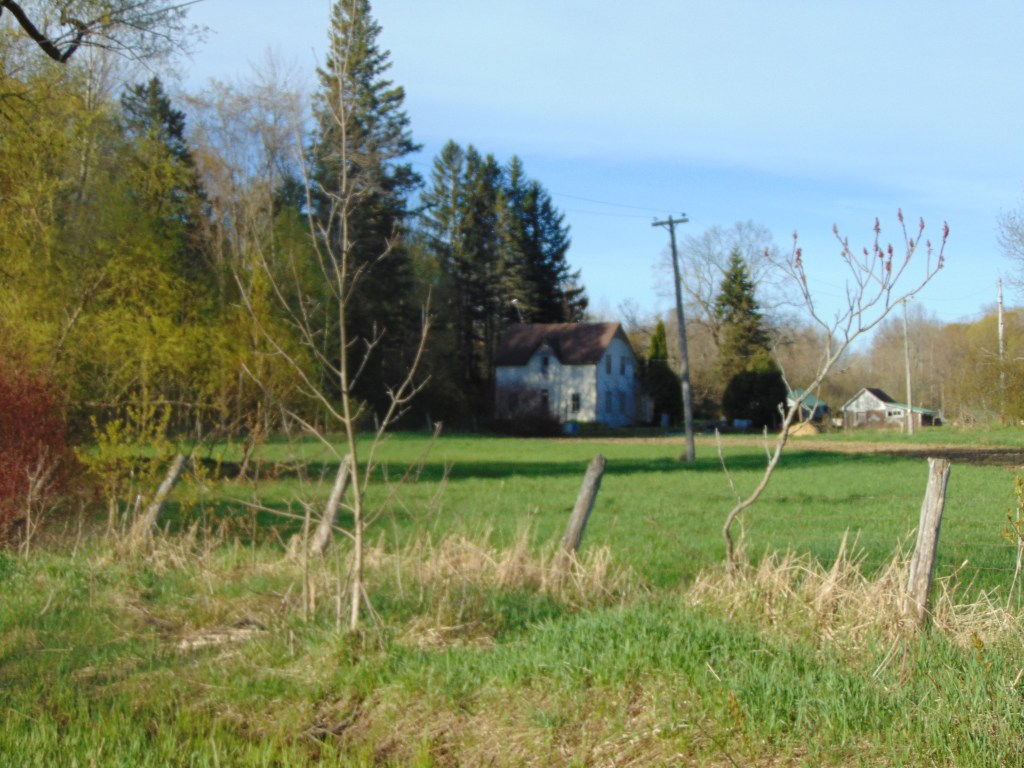
There is a limit though: thousands of species are being lost, vast natural environments destroyed in the name of economic progress and production, and life-unfriendly poisonous paradigms regarded as stubbornly essential, as if life can survive anything. It cannot, not even in a relatively small, designated government nature reserve that happens to surround my little farm; and an old tractor that probably should be in a museum.
So, yes, surely it is well worth taking a moment to draw attention to life’s ‘small miracles’ in the midst of such an age, while we can.
I am once again amazed by the beauty and the enduring hardiness of ‘the host of golden daffodils’ blooming again in front of my house at Cathedral Drive Farm. That’s especially considering this is the spring of the polar vortex, with unseasonably cold temperatures prevailing in mid-April as a blast of stubborn arctic air hovers over southern Ontario and other parts of eastern Canada.
But these are daffodils Wilma Butchart planted many years ago, as early as 1941; and I wouldn’t be surprised if her spirit is still here offering them some added protection from the cold. Indeed, I will go further and say, so strong was her love for Hope Ness, and its precious natural environment of land, forests and waters, that her spirit certainly remains.
Wilma was one of the first people who welcomed my young family when we moved to Hope Ness from Toronto in June of 1979. She was generous in helping us learn much about the area and its history. And in that regard, she often spoke of seeing people from the nearby Chippewas of Nawash community across Hope Bay still gathering forest edibles when she was a girl growing up on her Tucker family farm. Her attitude was entirely respectful and accepting of their continuing right to do that.
An only child, Wilma Tucker was born and raised a short distance from the farm that would become her matrimonial home, on the ‘no exit’ road she would name Cathedral Drive when the 911 emergency system was created. That name was derived from the forest at the end of the road she called ‘Cathedral Woods’ because of the overhead effect created by the mature deciduous forest canopy. As the years went by, Wilma often took to a trail through the woods with her easel and paints, to a lookout on the Niagara Escarpment cliffs overlooking the waters of Hope Bay and Georgian Bay.
The Dow Chemical takeover of most Hope Ness farms, including the Butchart-Tucker farms, against her wishes, was a deeply troublesome time, to say the least. Fortunately, Dow used that Butchart farm as its on-site base for study and testing. As a result the house and barn were not demolished like the rest of the farms Dow acquired. Meanwhile, the Butchart family continue to live and work the farm. There came a time some years later when Wilma and her adult son Cliff were able to get title back to the house and barn and 5.9 acres after the Ontario government acquired the 2,000 acres Dow had bought.
I count myself fortunate now to have had the opportunity to buy the farm after Wilma and Cliff passed because of their determination and endurance.
Wilma was a woman of many talents: artist, musician, poet, local historian, and gifted, creative gardener. She could have taken any of those talents and prospered in any number of places that offered many more opportunties; but she chose to remain in Hope Ness which she loved and where she felt a special energy. It is interesting to note that for thousands of years Indigenous people throughout the Great Lakes region regarded this same area as a ‘place of healing,’ called Nochemoweniing, in the Anishinaabe language of the Saugeen first nations.
Wilma had an intuitive understanding of the extent to which floral gardens – with something always in bloom – are able to help lift and maintain human spirits. She created beautiful gardens near the house and other locations. To this day, from early spring, starting with Daffodils, through the summer and falls seasons, lilies, tulips, roses and other flowers Wilma planted still bloom in their time. She was also an avid produce gardener. “Wilma’s raspberries” were highly regarded by her Hope Ness neighbors and to this day continue to produce delicious fruit for me.
I believe Wilma saw daffodils as the hopeful flower. She planted them deliberately to be the first thing her family would see as they rose from their upstairs bedrooms for another day’s hard work. A feature of the upstairs hall was, and remains, the fire-escape door and window overlooking the front of the house and a view of what the great English poet William Wordsworth would call, “a host of golden daffodils.”
I am not the only one who feels Wilma’s presence here. During a recent visit, Tobermory resident Yvette Roberts was drawn to a certain, secluded area of Wilma’s gardens. She found herself stopped, held by the intensity of the feeling she felt, prompting her to say, “Her energy still lives.”
The polar vortex isn’t quite finished with us. The forecast temperature for tonight is -3 Celsius. But with Wilma’s help, I’m sure her daffodils will endure, as always.
I found myself thinking of Easter a few moments ago, this Good Friday afternoon; and what came to mind is that it’s a holiday that people of many different cultural and religious traditions can honour and appreciate. That’s because it’s about the miracle of life, actual and spiritual, resurgent and ressurected.
I am grateful that as a boy living on a farm near Streetsville many years ago my guardian family attended church every Sunday in town; and, as a result, I became familiar with the story of Jesus, his life as a boy, and as a great spirit and man who I love to this day. And that remains true, even as my spiritual journey into what I often call the Great Mystery continues.
Certain images stand out: I see Jesus going alone at the night into the Garden of Gethsemane, to pray, to ask if perhaps there might be another way. He wept. He loved life. He accepted his fate, the very next day on the Cross.
I hear him cry out, “my God, my God, why has thou forsaken me.” And I feel for Him, my beloved friend. And moments later, when one of the ‘transgressors’ crucified on either side of Jesus speaks harshly to Him, the other comes to His defence, saying, “we receive the due reward of our deeds, but this man has done nothing wrong.” Then that man, feeling that he is unworthy of anything more, asks Jesus, “Lord, remember me when you come into your Kingdom.” Instead, Jesus says, “Truly, I promise you, today you will be with me in paradise.” That is, for me, the most powerful moment in the New Testament, only to be found in St. Luke.
Today I am an elder man, but young at heart, even like the child I was on that Streetsville area farm, now that I have one of my own. The seeds I planted indoors at the west kitchen window have germinated. They will be planted outdoors in one of my three garden plots come warmer weather. I am excited again at the prospect of watching the gardens come alive with new life.
I live, surrounded by nature, in a secluded area on the Saugeen (Bruce) Peninsula called Hope Ness. It is near a precious body of water called Hope Bay, sacred, to those who know it leads to ‘a place of healing’ visited by indigenous people throughout the Great Lakes for thousands of years. And so, I am surrounded by Hope, and the blessings of Mother Earth. I count my blessings every day.
Happy Easter to everyone on this beautiful, little blue-green jewel of a planet, this sacred gift. We are all one family in truth and spirit.
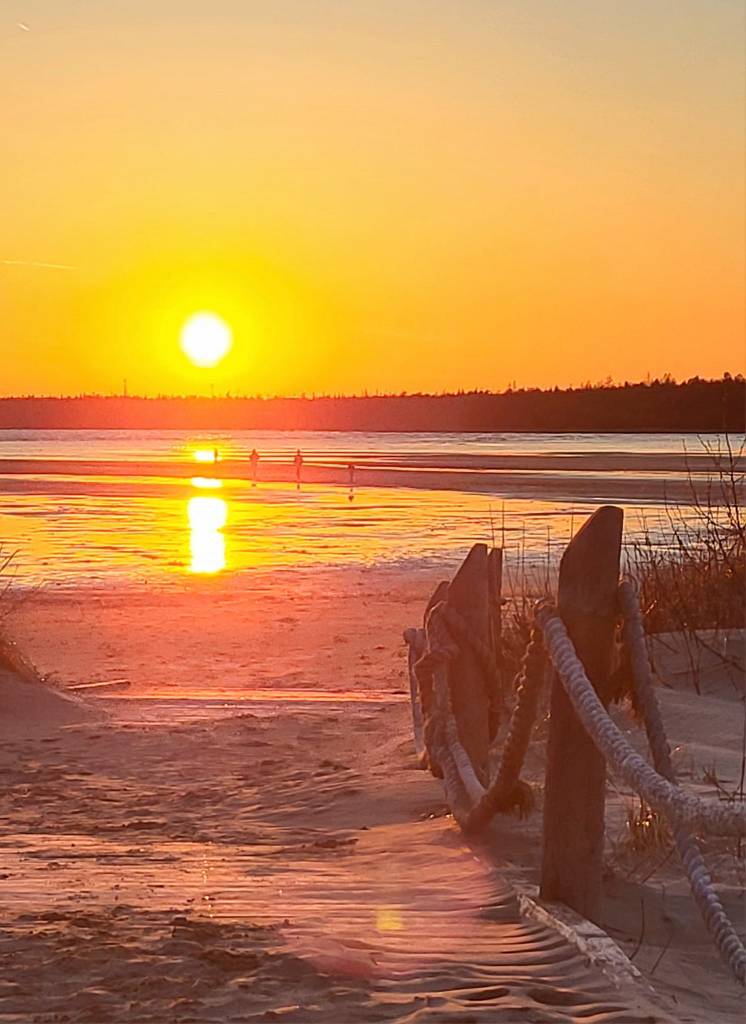
Last night on my way home I stopped by Singing Sands to give thanks.
If you believe you are a Child of the Earth then you know you cannot hide from anything.
You are one with your creator – Mother Earth.
You are joined to Mother Earth with every step and action you take .
From the air you breath to the food you eat that comes from her womb.
To the ground you walk on and build your life on.
To the sun that heals and warms you.
The water that sustains you and all life.
I say Miigwetch. Chi Migwetch
Yvette Roberts – Guest author/contributor
Photos by Yvette
Singing Sands beach, in the traditional territory of the Saugeen Ojibway Nation, is on the shores of Lake Huron in the Bruce Peninsula National Park. It is known for its fragile sand dunes, rare flowers, boardwalk and hiking trails. It is one of Mother Nature’s most precious creations.
On my morning walk at sunrise I noticed a few well-placed clouds and the sun had combined to offer this momentary gentle, and to my eye, lovely image. And as I happened to have my camera in my pocket, I accepted the offer, thanked them both, and now share it with others; with the thought added, that one never knows what wonders the next moment will bring into your life. Believe that, and you will always have hope in your heart.
As I began to look at the on-line news in the very ‘wee hours’ of this morning, The headline of a CBC Radio Canada article soon caught by eye: “Millions of people in Canada have sleep apnea. The problem is not all of them realize it.”
Indeed, “not all of them” was putting it mildly, when that was followed by this sub-heading: “Roughly 8 out (of) 10 with sleep apnea are undiagnosed.”
The article cites a 2014 study by Canadian medical experts. They cited information gathered by Statistics Canada indicating an estimated 5.4 Million Canadian adults had been diagnosed with sleep apnea or were at high risk of experiencing obstructive sleep apnea.
Sleep apnea is a condition in which breathing stops and restarts often many times during sleep. When that happens the heart has to work harder to keep pumping vital oxygen-rich blood to the body. Over time that can lead to heart problems. Meanwhile, there’s always the risk a person with sleep apneal won’t start breathing again.
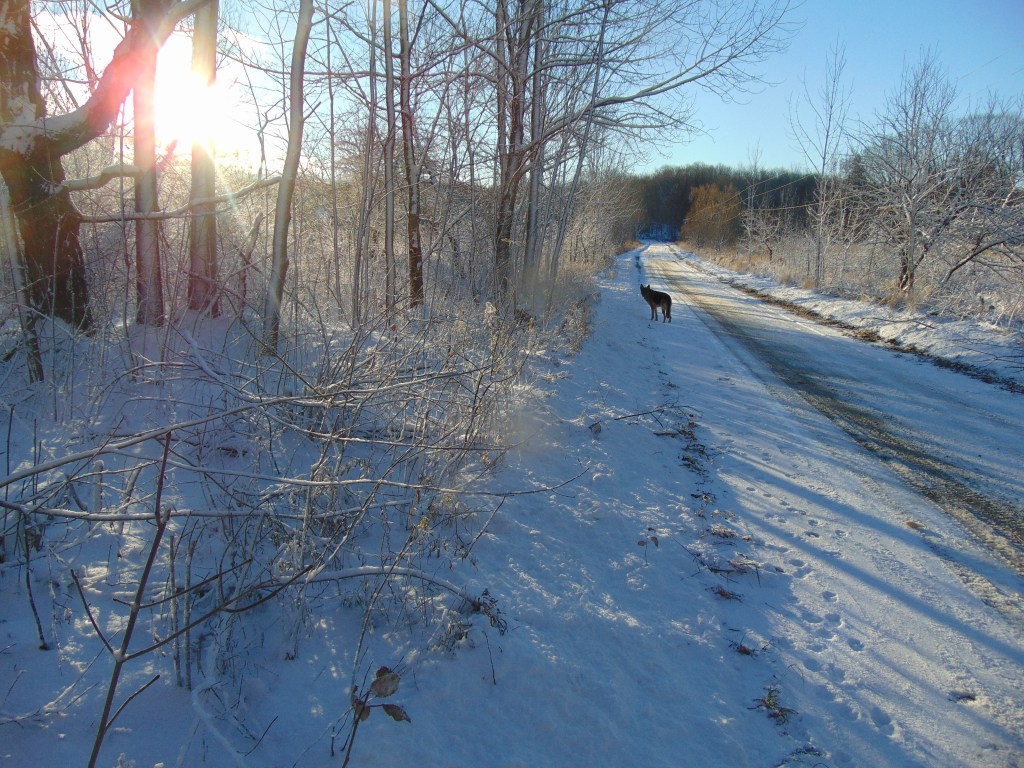
Sunrise on Cathedral Drive is always inspiring. That’s my Shepherd, Buddy. Just because.
So, if someone says, or perhaps complains, you snore and gasp in your sleep, you may want to consider seeking medical advice; or also, if you experience other symptoms of poor quality, or lack of sleep, like excessive tiredness and lack of energy during the day. The latter has become the story of my life in the past year as I struggle, so far unsuccessfully, to master the art of using what the CBC article calls the “first-line, gold-standard” treatment for sleep apnea, the CPAP machine
More about that in a moment; but first, the basics. The U.S. National Library of Medicine has one of the best, brief descriptions of the two types of sleep apnea, obstructive sleep apnea (OSA), and central sleep apnea. OSA “happens when your upper airway becomes blocked many times while you sleep, reducing or completely stopping airflow. This is the most common type of sleep apnea. Anything that could narrow your airway such as obesity, large tonsils, or changes in your hormone levels can increase your risk for obstructive sleep apnea. Central sleep apnea happens when your brain does not send the signals needed to breathe. Health conditions that affect how your brain controls your airway and chest muscles can cause central sleep apnea.”
I get the impression central sleep apnea is a relatively new area of study, but to be honest I don’t know, and maybe my memory has failed me on this point; but I don’t recall ever being told which type of sleep apnea I have, despite having had three overnight sleep lab tests, all of them in Owen Sound. The last one was mid-October, 2023. So far there are no results, and no telling how long I will wait to hear from a specialist to discuss them. I waited a year after my second overnight test about five years ago. I take that to be a measure of the level of demand. When I had my first test, the technician told me I woke up briefly 40 times because I had stopped breathing, but I had no memory of that happening. Fortunately, my brain took charge and pushed the figurative ‘restart’ button. And that was called “mild, to moderate” sleep apnea.
After the second sleep test, I was prescribed to go on a CPAP (continuous positive airway pressure) machine, after a trial run of a week when it seemed to work for me. With a constant level of measured, pressurized air going from the machine to your airway, the system is designed to take keep you breathing if you stop. And you will, that is a given with sleep apnea.
But, despite the encouraging start, there was a problem, though the machine itself was working properly when tested. I tried different remedies, including going from a nasal to a full mask (nose and mouth) and still the problem continued: waking up after an hour or two with a very dry mouth and throat.
Turns out this problem, getting used to the CPAP machine, is not unusual: Forty percent or more of people who start, give up on it; but that should not be an option.
I confess I gave up for a while, but, realizing the risk I was taking, tried again, and again. And I’m still trying, as my sleep quality has continued to worsen. Recently, I bought an oximeter device, as a kind of ‘back up’ just in case. Made to fit like a ring on suitable finger, the device keeps track of blood-oxygen level and heart pulse. One of the risks of sleep apnea is that the heart has to work harder to keep pumping oxygenated blood when breathing stops. If the blood-oxygen level goes below a set percentage – I’ve set mine at 92 percent – the device has a vibration-alarm that is supposed to ‘gently’ alert you to restart breathing, but not necessarily wake you up. I’ve got the alarm set a ‘very strong’ but still it doesn’t consciously wake me up. Fair to say, I think, it’s not a good idea for the hard of hearing. So, time to get hearing aids after all, I guess, ASAP.
The ring-device comes with a smart phone or computer app which, when connected to the device shows the ups and downs of your blood-oxygen and heart pulse. That has been interesting and eye-opening, especially when the blood-oxygen level has gone below 90, before recovering, which has happened a few times. That’s troubling, but better to know than not.
To summarize, my sleep apnea has recently become life-changing: tired during the day, while trying to catch up by napping one or more times; and worst of all, lack of energy, having to push myself to get doing what came so easily even up to a year ago.
That’s not the way I want to live; but I am determined to find a way to overcome this sleep apnea challenge. And when that happens, I’ll be sure to let you know.
My shattered touchstone, the sun rising in the background: a different ‘way of being.’
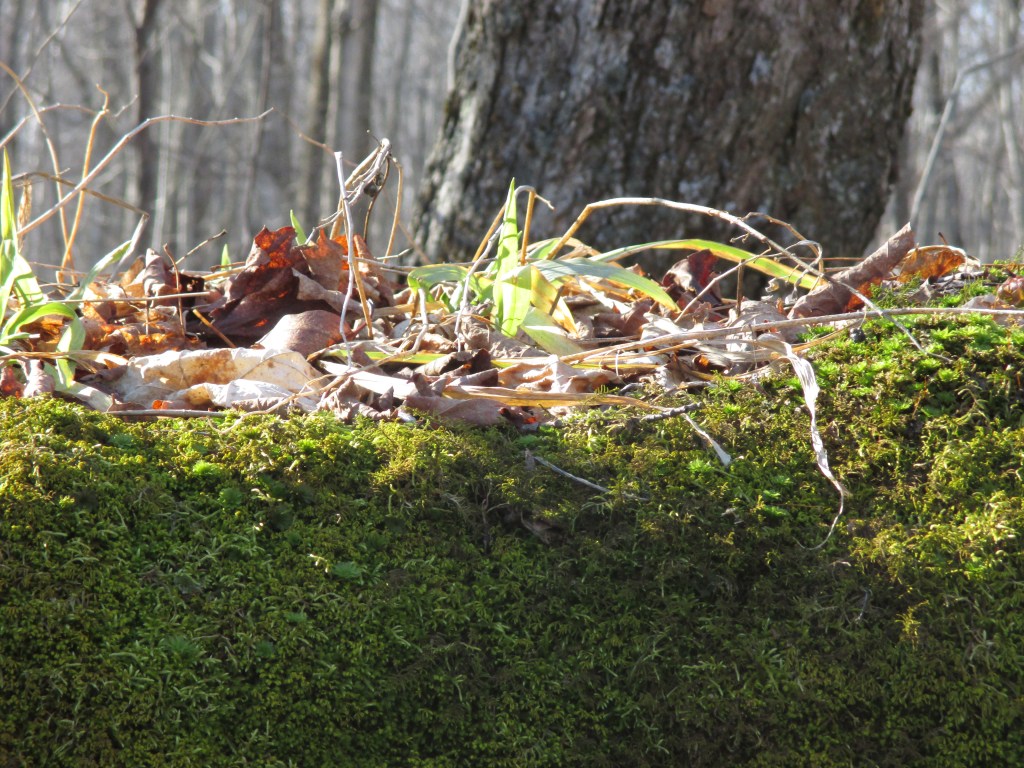
The Niagara Escarpment landscape here at Hope Ness and in the Hope Bay Forest Provincial Park nature reserve has many natural features well worth appreciating and protecting. I am fortunate to live, literally, in the midst of it. Among that wonderful diversity of features are numerous moss-covered rocks left here thousands of years ago when the vast ice-age glaciers began to melt and recede. At dusk, their moss blanket takes on a luminous glow that I find spell-binding. As I walk the Bruce Trail in the woods near my home, I always stop beside beside one large rock and marvel at the little garden of flowers and other small plants at its top that somehow survive the cold winters.
“There’s life in that rock,” I have said, stopping there for a while, imagining the stories it could tell of its creation, and, yes, the spirits within.
There is another rock, though, that is perhaps more special. I call it ‘my touchstone.’ If that sounds like I’ve somehow taken possession of it, I guess that’s true in some sense. When Buddy, my beautiful canine, German Shepherd came to live with me, and then a short time later, Sophie the mischievous Cockapoo, we three started walking north down Cathedral Drive. There was one of those moss-covered rocks standing alone beside the road, and partially hidden by wild raspberries bushes, tiny maple and ash saplings. The little trees never got bigger because the municipal plows, mowers, and those infernal machines that whip the young tree growth to an ugly death, wouldn’t allow it.
I suppose too the machinery sometime gets damaged because the rock is easily overlooked during the growing season, or covered with snow in winter. I get it; and to that extent, I understand.
Still, I was surprised and shocked to discover last Friday morning about 9:30 my touchstone had been demolished.
With few exceptions, my dogs and I have walked down Cathedral Drive every morning after breakfast for five years, or thereabouts, to the touchstone. Usually it’s just as the sun is rising over the woods to the east. Between the road and those woods, a former farm field that hasn’t been worked for a long time is filling up with wild apple trees as the field is left to revegetate naturally. When we reach the rock I put my right hand on its moss blanket. My left hand holds Sophie’s leash. Buddy stays close by. Often, especially when someone in my family was not well or for other reasons needed spiritual help, or I was myself feeling not so good, I pray; usually the Lord’s Prayer – because that’s what I grew up with, and I’m a creature of habit – with some additional words.
The road, Cathedral Drive, Hope Ness
Sometimes, I let the rock inspire my spiritual imagination; or should I say, ‘horizons;’ because we are, above all, spiritual beings, and it is no small matter to go there and grow. Our spiritual journey is the most important one we will ever take. So, an extended opening of unknowable depth near where the rock met the earth, became a portal to the Cosmos, and beyond that, the Great Mystery, which is what I call God in my open-minded way.
And then suddenly at 9:30 am Friday morning, there it was: in a few minutes at best broken into pieces large and small, each exposed and strangely raw and white in the morning light, except for the one partially covered by what was left of the moss blanket. Further along Cathedral Drive other rocks that must have been causing problems for municipal equipment were also broken up.
“So, this is what a rock looks like when it dies,” I think just now, as I write this and look at the photos I took this morning. But, on second thought, I don’t think so. It has taken on a different way of being, as I will when my time comes. And that gives me much consolation.
This morning, Saturday, November, 4, 2023, the dogs and I took our morning walk as usual. I note the date here because, after all, that rock was millions of years old, and it only seemed right. Buddy, off leash, was the first to reach the site. I could see he was surprised, as he carefully explored the ground where the rock had been, and then the pieces, large and small, before he looked back at me as I approached.
So, there it is; but I will continue to go to the place, pay homage to what remains, and quietly say the words I need to say.










 Finding Hope Ness