The lead article in the Washington Post’s ‘Todays Worldview’ about the earth-shattering disaster under way in the world’s greatest democracy should be read and understood by everyone on Earth who cares about the future, peace, and stability of human life.
Author: findinghopeness
New Hope Bay park signs end up saying a lot about Saugeen Ojibway Nation’s land and water claim lawsuit

It may have been August 30 when I first saw the new ‘park boundary’ and ‘no hunting’ signs posted on both sides of Cathedral Drive north of my property at the end of the ‘No Exit’ gravel road. I’d been away on a long trip and took a couple of days to rest up at home before going up that way with the tractor.
My first thought was the signs might have something to do with a possible out-of-court, negotiated settlement of the Saugeen Ojibway Nation (SON) land and water claim lawsuit. I’ve long believed a settlement of the multi-billion-dollar SON lawsuit would have to include a lot of land as well money in compensation, and that Hope Ness is bound to be part of it. The Hope Bay Forest Provincial Park (Nature Reserve) includes 353 hectares (873 acres). Other Ontario Crown land in the Hope Bay-Hope Ness area is of similar size and includes a large swath of Georgian Bay-Hope Bay shoreline.

My first thought was surely too much of a leap I initially told myself; but still, it was worth some research and a few phone calls.
And that’s how I found out, yes, there have been tentative talks at least; or, as a reliable source told me only, “there have been a few meetings.”
I was also surprised to discover that a three-judge, Ontario Court of Appeal panel has finished their deliberations regarding SON’s appeal of the initial Superior Court trial decisions two years ago. The appeal court decisions were published on the courts website August 30. That’s two weeks ago as I write this, and as far as I know, the news media has not picked up on and covered this important news.
The non-indigenous, local community has especially been kept in the dark over the years as the lawsuit has been slowly making its way through the legal process. Meanwhile, little has been done to prepare people for a day, and a negotiated settlement, that may be coming soon.
Late last year, a newsletter sent out to members of the two SON First Nations under the heading ‘Negotiations’ spoke of an intention to reach out to the two main defendants in the lawsuit.
“While we are pursuing our appeals, there may be a chance to start negotiations with Canada and Ontario to settle our claims.” In the past little progress was made, “but now we have a finding from the court in the treaty claim that the Crown behaved dishonourably towards us … We are reaching out to Canada and Ontario to invite them to begin those negotiations,” the newsletter said.
The appeal court also dealt with issues raised by municipal defendants who have not already settled with SON, including the Northern Bruce Peninsula and Southern Bruce Peninsula.
For example, the court has decided local municipalities are not responsible for financial damages SON may stand to get in connection with former Saugeen land now taken up by municipal roads. Under a treaty signed in 1854 surrendered land was to be surveyed, including into 100-acre farm lots, and the money put into trust funds for the benefit of the Saugeen first nations. But no provision was made for land that became road allowances under municipal jurisdiction.
The Ontario appeal court again denied the larger Aboriginal Title to the waters around the peninsula, as far as the U.S. border in Lake Huron; but in an unusual move the court has invited SON to seek title to a smaller area. That would most likely be an area known to the Saugeen Ojibway in the Anishinaabe language as Nochemowenaing, translated to English as ‘Place of Healing.’ That location is on the Georgian Bay side of the peninsula in the Hope Bay area.

Justice Wendy Matheson, who presided over the initial Ontario Superior Court trial, did not decide in favor of the larger Aboriginal Title; but she was much impressed by the cultural and spiritual evidence presented by elders from both First Nations that make up the Saugeen Ojibway Nation. They are the Chippewas of Nawash First Nation, with their home community beside Hope Bay, and the Saugeen First Nation beside the Saugeen River on the Lake Huron side.
“Joanne Keeshig testified about the role Anishinaabe women carry out with respect to water,” Justice Matheson wrote in her decision. “Like Karl Keeshig, she is a Third Degree Midewin and a member of a Midewin Lodge. She testified about the resurgence of the Midewin Lodge beginning in the 1970s. I found her evidence about her faith deserving of significant weight.
“Joanne Keeshig’s evidence also spoke of the Creator,” Justice Matheson wrote. “The Creator gave Anishinaabe women the primary responsibility to care for water. Anishinaabe women perform water ceremonies. In Joanne Keeshig’s view, if the Anishinaabe did not conduct water ceremonies, they would become disconnected from their purpose in life.
“Nochemowenaing was a very significant place from the Indigenous perspective, both as of 1763 and in more modern times. The waters at Nochemowenaing were and are believed to have healing qualities.”
The Court of Appeal judges took serious note of Justice Matheson’s written comments about Nochemowenaing, and also her inability to go further without a submission from SON during the trial. However, the court noted “SON asks this court to remit this alternative claim to the trial judge ‘for a judgment, after further evidence and submissions, on the question of Aboriginal title to a portion of the Aboriginal title area claimed.’”
The appeal judges agreed. “SON should not have to begin a new proceeding to determine this issue. The trial judge in this case is uniquely qualified to assess this request because of her long familiarity with the evidence and issues. The trial judge can devise a procedure that is fair to both sides, including further pleadings, discovery, and hearings that she deems necessary” to meet the legal test based on precedence.
Meanwhile, “the concerns of some of the parties and interveners about Aboriginal title to submerged lands and the public right of navigation cannot be addressed until the extent of Aboriginal title, if any, is determined.”
The multi-billion-dollar lawsuit was first filed in Ontario Superior Court in 1994. Initially, it focused on issues related to the way SON’s ancestors were pressured into signing a treaty that surrendered most of their remaining territory on the then Saugeen, now Bruce, Peninsula. Saugeen leaders were given one day to comply, or not, while Crown agents said they could no longer keep non-Indigenous squatters out of the territory. Just 18 years year earlier other Crown negotiators had promised to protect the integrity of the Saugeen territory on the peninsula if the ancestors signed a first treaty in 1836 that surrendered an even larger area.
The claim for Aboriginal Title to the waters around the peninsula was added later to the lawsuit.
After years of ‘discovery’ the Superior Court trial began April 2019. It ended July 2021 with Justice Matheson’s 200-page decision partially in favor of SON, in that it agreed the ‘Honour of the Crown’ had been brought into disrepute by the behavior of Crown representatives at the treaty negotiations; but Justice Matheson did not find in favor of the Aboriginal Title claim, and she also did not agree the Crown had a fiduciary (trust) duty that had been violated. SON appealed those decisions to the Ontario Court of Appeal.
Here is a link to that court’s decision: https://coadecisions.ontariocourts.ca/coa/coa/en/item/21689/index.do#_Toc144139795
Readers might want to jump to Part VI near the end of the document under the heading ‘Dispositions’ before tackling the rest.
And what of those signs that sent me on my quest for information?
The Hope Bay Forest Provincial Park, designated a Nature Reserve, now comes under the management of the Ontario Environment Ministry. It was previously the Ministry of Natural Resources responsibility. The park was created in 1985.
The Ontario government acquired about 2,000 acres in the former farm homestead community of Hope Ness after Dow Chemical decided not to go ahead with a plan to develop a huge quarry to mine the limestone bedrock for its magnesium content. In the mid-1960s Dow offered Hope Ness farmers $5,000 for their 100-acre farms. At the time “there was a farm on every hundred acres,” I was told when I came to live in Hope Ness in the spring of 1979. I bought one of the few houses that survived the Dow takeover because the farmer who owned it at the time refused the Dow offer. Most went for it, though it caused much bitterness in some families. Houses and barns were demolished, and families had to move.
The house and barns on the property where I live now on Cathedral Drive were saved because Dow had its on-site testing and research base here. And the Butchart family that had owned the farm were able to stay. They continued to live here after the farm became Ontario Crown land. Wilma Butchart (Tucker) and her son Cliff went to the Natural Resources office in Owen Sound to see if there was any way they could get title back to the farm. Eventually, they were able to get ownership of 5.9 acres and the house and barn and other outbuildings. The Hope Bay Forest Provincial Park/Nature Reserve now surrounds that piece of private property. What does the future hold? I wonder.
Earlier this week I contacted an Environment Ministry spokesperson to ask about the new signs. I was asked to email my questions. Had the park/nature reserve been expanded? Not that long ago in my eight years at the Cathedral Drive farm, I had seen deer hunters in the area recently posted with the new signs. Why now, and why the new signs? And I asked, is it because talks are underway for a possible, negotiated settlement of the SON lawsuit?
The answer came back: there has been no change, and no expansion of the nature reserve. It has always been there since the park was established. Hunting is allowed on other no-park provincial Crown land farther north.
As for talks about a possible negotiated settlement of the SON lawsuit currently underway? No answer. No mention at all.

The old barnyard comes alive
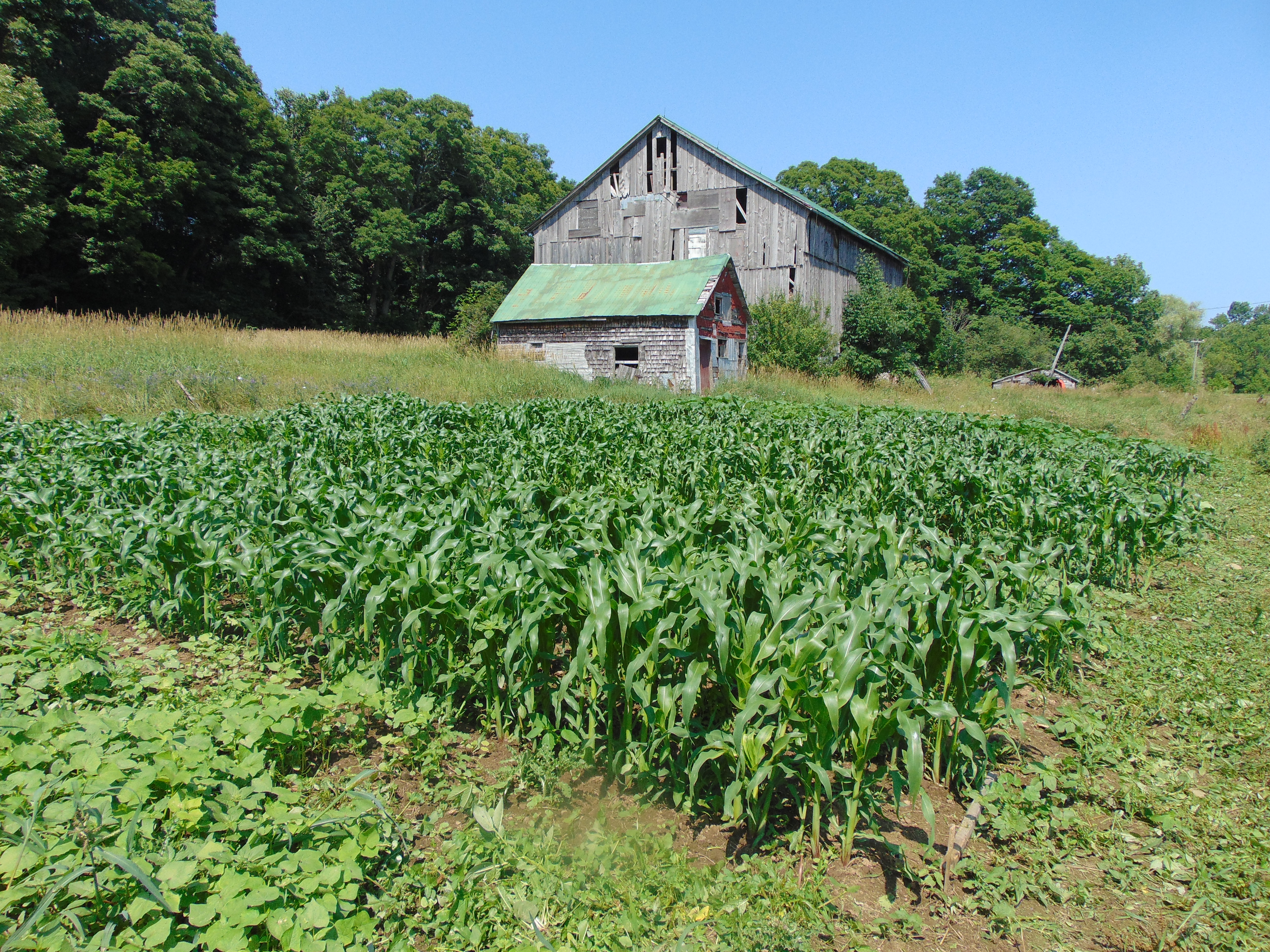 In the spring of 2022, I finally put two and two together and decided the time had come to work up the ground in part of the old barnyard to see if that might be a better place to grow vegetables.
My two existing garden plots closer to the house have poor drainage and low fertility issues that seem to aggravate the already challenging characteristics of the heavy clay loam soil. A few days without rain and it turns into the dreaded, unworkable hardpan. Not ideal for gardening, to say the least. The use of lots of straw mulch to help keep moisture in the soil, and to be worked into it after harvest, hasn’t seemed to seem to help much in the seven years I’ve been gardening here.
Meanwhile, the barnyard sloped gently and naturally toward my small portion of the old hay field. (The greater portion, stretching west between the forest on either side is now part of the Hope Bay Nature Reserve. A long story that: see ‘The Day Dow Came to Hope Ness’ in this blog.)
For 100-plus years the barnyard had been fertilized by livestock, beginning in the 1880s as a pioneer homestead, mixed farm. The barn was set up for beef cattle; first, oxen, then horses, were used to till the soil. The first temporary home for the farm family was built near the barn some time soon after John Heath bought the 100-acre lot in 1880 for $100. It eventually became a pig barn after the permanent house was built in 1895.
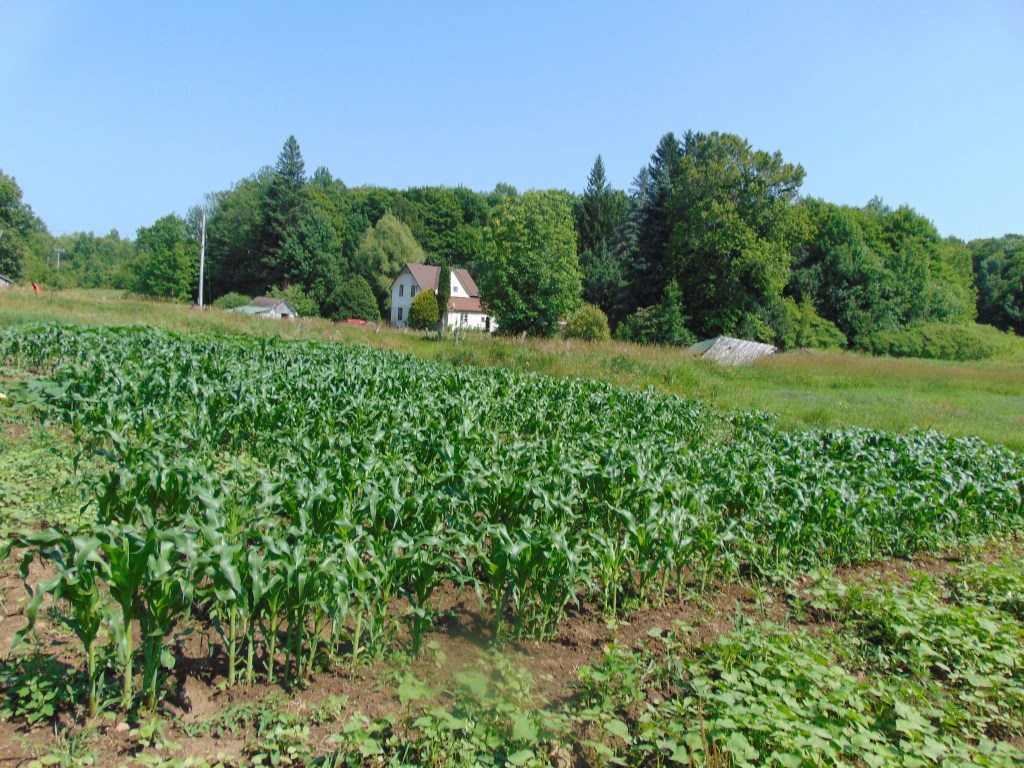
So, it was a given: the barnyard soil was bound to be fertile.
After I had the 2022 season garden planted by the late spring, I first broke the south portion of the barnyard ground with the 1950-vintage Ferguson cultivator. The 1930’s vintage drag cultivator worked best for the final passes. As a cover crop I scattered 50 pounds of buckwheat in early June when the risk of frost had passed. Despite its name, Buckwheat is not a grain, though it is often used like cereal grains. I use it along with wheat flour in my favorite muffin recipe; and I use it as my favorite cover crop because it grows high and dense enough to shade out and discourage the growth of twitch grass. Still a bane of an organic farmer’s existence, twitch grass, also known around the world by other names, such as couch grass in the U.K., is not indigenous to North America. It’s arrival sometime in the early 20th Century quickly spread and became a big problem for farmers and other plants because, among other attributes, it secretes an enzyme that discourages the growth of other plants. It’s no doubt one of the big reasons why Monsanto invented the now much-used herbicide Roundup.
The barnyard was overrun with twitch grass. Two, successive crops of buckwheat, the first mowed down to re-seed itself, is best to discourage twitch grass; but I wanted to plant a garden in the spring of 2023, so I made a point of cultivating before the first frost in the fall of 2022, and in the early spring of 2023 to expose the dense twitch grass root-network to killing cold. I used my 40-year-old TroyBilt rototiller sparingly (two passes – one shallow, one deeper – to prepare the soil for the planting of ‘the three sisters,’ rows of beans, pumpkin, butternut squash, and sweet corn.
Organic Cinderella pumpkin seed was acquired locally, from Franken Farms Seed. Untreated bean, butternut squash, and one variety of sweet corn came from Willian Dam Seeds. My old standby, early peaches and cream sweet corn, also untreated, and not bioengineered, came from Ontario Seed Company (OSC).
I started planting May 26, and finished in the first week of June. But, as Ontario farmers and gardeners know, the 2023 season began with a month-long drought in late May and early June. I hand-watered my three garden plots daily from a dug well. There’s nothing like rain; but I managed to keep the transplanted, started indoors pumpkin and squash alive; However, I feared the untreated corn seed in the new barnyard garden was a loss because the soil temperature was too low for germination; but, to my surprise, three planting of corn came up, at a rate of about 60 percent after the rain. Still, it was a joyful occasion.
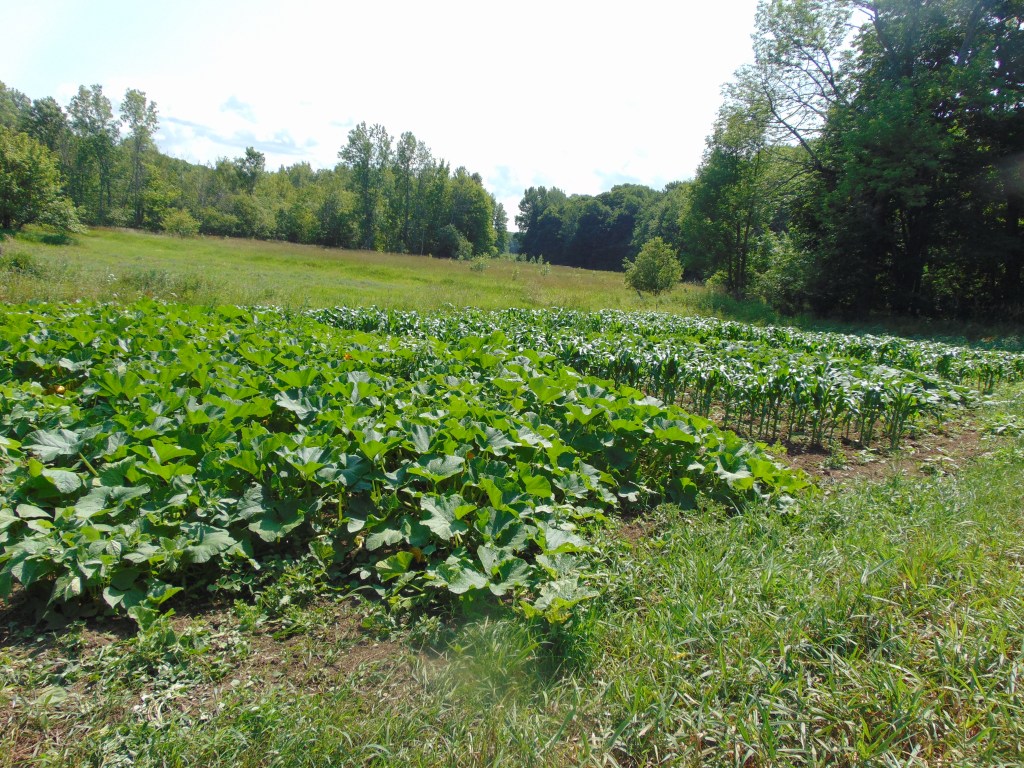
And within a couple of weeks, the new garden in the old barnyard was flourishing. Indeed, I don’t think I’ve ever seen such dynamic growth, especially of the squash family, pumpkins (Cinderella) and butternut squash. Meanwhile, the sweet corn is growing so well I’m not going to bother with the usual side dressing of fertilizer for this heavy feeder.
I also hope in some way to honor those who came before on this farm, and worked so hard, for so little. From the barnyard garden I look out across that long, hay field reaching out to the west in the darkening sky. Soom enough the forest on either side will close in again, and their being here, most of them for less than 100 years, may be remembered only as a brief episode. I feel their tears in the soil as, on my knees, I pull out weeds by hand; but I see little of the twitch grass that drove men mad remains.
I see them smile and hear them say, “well now, isn’t that something. Good for you, young fellow.”
April 2023, a new climate reality, and gardening lesson learned

“April is the cruelest month,” T.S. Eliott wrote in the first line of his epic poem, The Waste Land.
And so it has been, first bringing forth hope, an early spring warmth that seemed to say ‘YES’ in no uncertain terms and sent me out too early to the wonderfully workable soil to plant Oregon Giant edible pod peas, onion sets, a row of well-sprouted potatoes, and beets. All hardy or semi-hardy, early crops that need not wait ‘til all risk of frost has passed; but, even so, they have their limits: weeks of cold, wet weather do not make for happily germinating peas, I fear.
April beguiled me, in collusion with the reality of a jet stream no longer predictable, but weakened and disrupted by climate change, with the Arctic warming much more so far than the tropics. As a result, after the warm spell, a huge jet stream nodule of cold air dropped down below The Great Lakes, well into the U.S. Midwest. And there it has stayed, day after day after day.
Some there are who say, this is the new reality: spring comes, but don’t count on it for the old assumptions gardeners relied on; they no longer apply.
The temperature hit a balmy 26 Celsius here in Hope Ness on the Saugeen (Bruce) Peninsula one day a couple of weeks ago. I was out planting that afternoon in a T-shirt, the annual, seasonally-new, straw hat tried on for the first time; surely, this could not be wrong, I thought: the soil had worked up so nicely. If anything, it seemed late to be sowing peas, more like mid-May or early summer, than mid-April.
Raise your hand if you thought so too.

And now, April 29, the forecast for next week as May arrives is continuous overnight, single-digit temperatures and flurries mixed in with cold rain. It leaves me wondering how well the peas and onion sets will produce, or even if they will.
Meanwhile, the flats of seedings I put out in the cold frame are back inside the house and struggling to recover under grow lights.
I’ve often said gardening is a never-ending ‘learning experience.’ And that certainly has been true this April of 2023.
Sauble Beach: Time to move on to a new opportunity for the sake of the Beach, and Canada
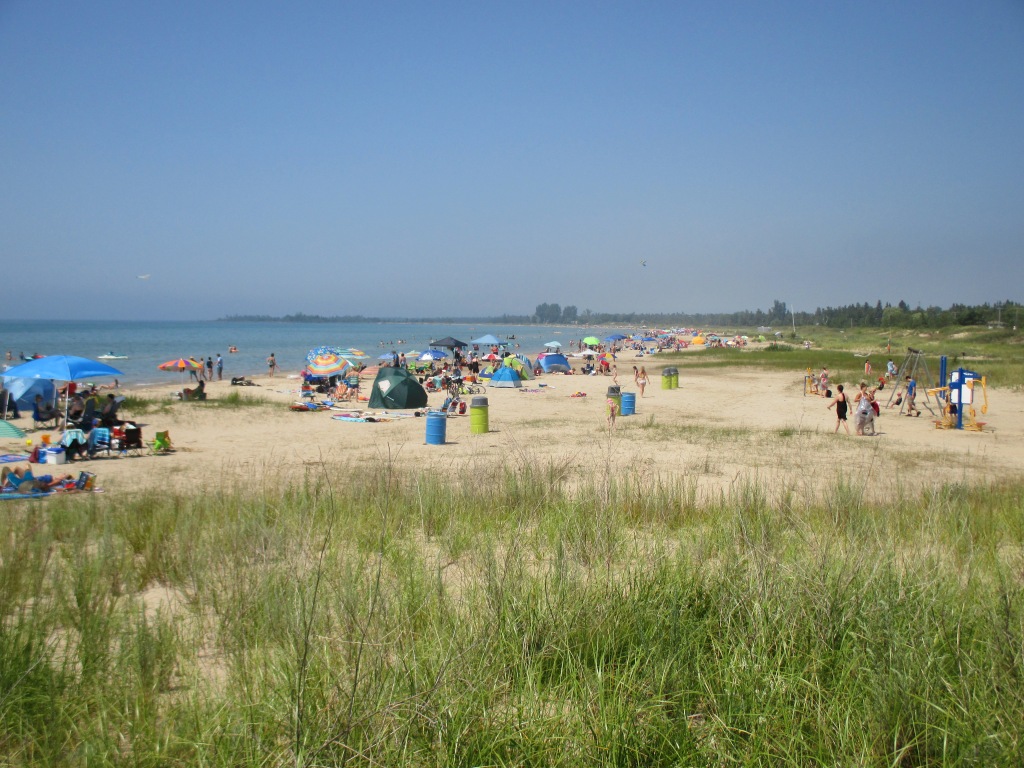
The recent Ontario Superior Court decision confirming the Saugeen First Nation’s rightful ownership of the north section of Sauble Beach is in itself an important milestone in Canada’s path toward meaningful reconciliation with Indigenous people.
Possibly just as significant in the future is the potential for a new, or renewed, era of improvement and development in all aspects of Sauble Beach’s well-being. Above all, that would include protection of the natural environment, and a new vision of future development that honors the longstanding First Nation presence and the principle of reconciliation.
I say ‘potential’ because it all depends on how open to, and how well, the indigenous and non-indigenous communities work together to make it happen. In other words, will there be peace and reconciliation, and cooperation for the overall good of the beach and both communities? The answer to that question will be nothing short of a litmus test for the future of Canada, as well as the future of Sauble Beach. There is far more to be gained by thoughtful cooperation than resentful confrontation.
Such an approach could be applied to the most mundane aspects of Sauble Beach’s future, as well as the most noble. One thing that comes readily to mind is Sauble Beach and the surrounding communities are long overdue for water and sewer services. The Saugeen First Nation and the Town of South Bruce Peninsula may want to put their heads together and join forces as soon as possible to call upon the federal and provincial governments’ help to make that a Sauble Beach development priority.
The court decision has set the stage for an interesting, new dynamic: the interface of an Indigenous community with considerable experience hosting non-indigenous tourists and cottagers on its territory, now sharing with a municipal government the well-being of a major tourist attraction and the mostly non-indigenous, business and residential community built around it. Respectful cooperation is surely the order of this new day.
In all the circumstances, and considering what’s at stake, it’s a wonder the long-standing, Saugeen land-claim didn’t get far more news media coverage and public attention before news of the court decision broke early this month.
The case, based on the Saugeen First Nation’s long-standing claim of ownership, has been before the Ontario court since 1995, but its roots go back 169 years: Treaty 72 was signed under controversial circumstances on October 14, 1854, after a hastily arranged day of intense negotiations engineered by Laurence Oliphant, the newly-appointed Superintendent General of Indian Affairs for Colonial Canada. Oliphant warned the Saugeen Ojibway (Chippewas of Nawash and Saugeen first nations) chiefs that the Crown might not be able to keep squatters out of their Saugeen Peninsula territory as he pressured them to surrender most of it. Yet, later the same day, after the treaty was signed, Oliphant posted a public notice and ordered the Owen Sound-based sheriff to keep squatters out of the newly-acquired Crown territory. The peninsula was soon renamed the Bruce Peninsula after a colonial official who had never been there. The Saugeen Ojibway were to be left with a few relatively small reserves, including the Saugeen First Nation reserve on the Lake Huron shoreline from the Saugeen River to Chief’s Point at the mouth of the Sauble River north of Sauble Beach.

Prior to the recent court decision, the Saugeen First Nation had long claimed the survey done two years after the treaty was signed did not correspond to the intent of the treaty. Ontario Superior Court Judge Susan Vella agreed in her finding that the honor of the Crown had been brought into disrepute by the mistaken survey, and the Saugeen First Nation was the rightful owner of that north portion of the beach that has been under local municipal jurisdiction for many years. Meanwhile, the southern portion of the beach, south of the iconic Sauble Beach signpost, has been Saugeen territory since after Treaty 72 was signed and surveyed.
There was an opportunity for a negotiated settlement of the Saugeen First Nation claim of ownership of the north section of the beach in the summer of 2014. With the support of Canada’s federal government Justice Department, and if its ownership of the disputed section of the beach was recognized, the First Nation was prepared to enter into a co-management agreement with the Town of South Bruce Peninsula; but that deal ran into a fire-storm of public opposition from many in the largely non-Aboriginal community of Sauble Beach when it was presented and discussed at a public meeting in August, 2014; and as a result the court case continued unresolved for another almost nine years.
That was an opportunity lost; but another, similar opportunity presents itself now.
South Bruce Peninsula council has chosen to file an appeal of the April 3 court decision; but it appears to be focused on clarification of the western boundary between the newly confirmed Saugeen territory and the municipality, and the status of private property on or near the north section of the beach. Fair enough; but it’s time to move on to that new opportunity.
‘Have a Heart’ for desperate refugees in a world going mad

File this under ‘How soon we forget the lessons of shameful history,’ including one of the most shameful events in Canadian history.
In thinking about changes to the Safe Third Country Agreement, announced this past week during U.S. President Joe Biden’s official visit to Ottawa, I was soon reminded of the S.S. St. Louis tragedy.
With 937 937 passengers on board, the German-owned, ocean liner left the port of Hamburg, Germany on May 13, 1939, bound for Cuba. Almost all were Jewish refugees fleeing persecution, death, and violence in Nazi Germany. The so-called ‘Nuremberg laws’ of 1935 had stripped Jewish Germans of their citizenship and civil rights. For a while, the 1936 Olympics in Berlin, delayed some of the worst anti-Jewish persecution; but especially after Kristallnacht (literally, the “night of Crystal,” more commonly known as the “night of broken glass,”) a two-day, anti-Jewish, hate-orgy of violence in November, 1938, the persecution became much worse, deadlyand ominous.
“The German Foreign Office and the Propaganda Ministry also hoped to exploit the unwillingness of other nations to admit large numbers of Jewish refugees to justify the Nazi regime’s anti-Jewish goals and policies both domestically in Germany and in the world at large,” says an article titled, Voyage of the St. Louis, on the United States Holocaust Museum article website.
The Nazis must certainly have been pleased by the extent to which their hopes were realized. First, Cuba, refused to let the Jewish refugees disembark in Havana, despite earlier approval and the issuing of landing and transit documents, then the United States; and finally, Canada said, in effect, no way.
Before the St. Louis left Hamburg, it attracted a lot of news attention, especially in Cuba, where right-wing newspapers “deplored its impending arrival and demanded the Cuban government cease admitting Jewish refugees,” says the Holocaust Museum article.
“Reports about the impending voyage fueled a large antisemitic demonstration in Havana on May 8, five days before the St. Louis sailed from Hamburg. The rally, the largest antisemitic demonstration in Cuban history, had been sponsored by Grau San Martin, a former Cuban president. Grau spokesman, Primitivo Rodriguez, urged Cubans to ‘fight the Jews until the last one is driven out.’ The demonstration drew 40,000 spectators. Thousands more listened on the radio.”
The passengers became victims of bitter infighting within the Cuban government. They weren’t told before the St. Louis left Hamburg that Cuban President Federico Laredo Bru had issued a decree invalidating all recently-issued, Cuban landing certificates.
The St. Louis reached Havana on May 27, 1939. Cuban officials allowed 28 passengers to disembark: 22 were Jewish and had valid U.S. visas. The other six were Spanish citizens and Cubans with valid documents. One passenger who tried to commit suicide was allowed ashore to be taken to hospital. Another person had died of natural causes on the voyage. The remaining 908 Jewish, refugee passengers carried documents issued corruptly by the Director-General of the Cuban Immigration office, Manuel Benitez Gonzale, and no longer valid. Of those, 743 had applied for but were still waiting for U.S. immigration visas. The ship’s Captain, Gustav Schroder, refused to leave Havana Harbor; but talks aimed at allowing the refugees to disembark failed. On June 6 President Bru ordered the St. Louis to leave Havana harbor.
Capt. Schroder took the St. Louis slowly north in hopes the U.S. would allow the refugees ashore at one of the many ports on the eastern seaboard.
“Sailing so close to Florida that they could see the lights of Miami, some passengers on the St. Louis cabled U.S. President Franklin D. Roosevelt asking for refuge. Roosevelt never responded,” according to the Holocaust Museum article. “The State Department and the White House had decided not to take extraordinary measures to permit the refugees to enter the United States. A State Department telegram sent to a passenger stated that the passengers must “await their turns on the waiting list and qualify for and obtain immigration visas before they may be admissible into the United States.”
Apparently, some things never change:
“Both of our countries believe in safe, fair and orderly migration, refugee protection, and border security. This is why we will now apply the Safe Third Country Agreement to asylum seekers who cross between official points of entry,” Canada’s Prime Minister, Justin Trudeau said at a news conference during U.S. President Biden visit, the CBC reported. “After midnight tonight, police and border officers will enforce the agreement, and return irregular border crossers to the closest port of entry with the United States,” Trudeau added.
As the St. Louis continued north toward Canada, a group of prominent citizens petitioned Prime Minister Willian Lyon Mackenzie King to offer the refugees sanctuary. He passed it off to other high-ranking officials, including Minister of Justice Ernest Lapointe, and Frederick Blair, director of Immigration, according to The Canadian Encyclopedia:
“Lapointe was ‘emphatically opposed’ to admitting the refugees, and Blair argued that they did not qualify under current immigration laws – laws he had created. ‘No country,’ according to Blair, ‘could open its doors wide enough to take in the hundreds of thousands of Jewish people who want to leave Europe: the line must be drawn somewhere.’”
“At the time religious intolerance and antisemitism were common in Canadian society and even in its cultural and political leaders — right up to Prime Minister William Lyon Mackenzie King,” The Encyclopedia Canada article says. It goes on to quote from King’s private diary entry from March 29, 1938:
“We must nevertheless seek to keep this part of the Continent free from unrest and from too great an intermixture of foreign strains of blood, as much the same thing as lies at the basis of the Oriental problem. I fear we would have riots if we agreed to a policy that admitted numbers of Jews.”
In fact, one of the worst anti-semitic riots in Canadian had already happened in the summer of 1933 in Toronto, soon after the Nazi (National Socialist German Workers’) Party had made Germany a one-party, fascist dictatorship under its leader (Fuhrer) Adolf Hitler. The Christie Pits Riot on August 16, of that year, “remains one of the worst outbreaks of ethnic violence in Canadian history with over 10,000 participants and spectators,” says The Canadian Encyclopedia. “The riot was sparked by Nazi-inspired youth flying a swastika flag at a public baseball game to antagonize and provoke Jewish Canadians.”
With no sanctuary found, the St. Louis returned to Europe, docking at the Port of Antwerp, rather than Hamburg, Germany. With the help of a Jewish charitable organization, Great Britain took 288 passengers, the Netherlands 181, Belgium 214; and 224 found at least temporary refuge in France. Of the former refugees who found sanctuary in Britain, all survived except one who died in a 1940 air raid. Of those left on the continent, 254 died in the death-camps of the Holocaust.
In retrospect, it’s easy enough to see that under the circumstances at the time, and well-documented history as it is now known, Jewish refugees desperately trying to escape Nazi Germany just before the start of the Second World War were in urgent need of extraordinary, life-saving help. And if that meant that the usual bureaucratic process and rules needed to be set aside, so be it. That anti-Jewish racism played such a role in Canada’s failure to help save Jewish refugees remains shocking and shameful.
The world is now facing a similar humanitarian challenge with immensely tragic consequences as multiple crises arise: wars, the increasingly extreme effects of climate change; and most troubling, the resurgence of hateful regimes that exploit the worst of human nature and its fears: even in the most civilized of nations, including the world’s first and greatest liberal, modern democracy. It’s as if the world is going mad.
Meanwhile, millions of innocent victims have little or no access to bureaucratic processes: all they can do is try to escape one desperate way or another at the risk of their lives.
And if that takes them to Roxham Road, in Quebec, Canada, near the border between Canada and the U.S., or for that matter any other so-called illegal refugee entry point, are they somehow unworthy of being helped, saved from their fate, and thus “sent back?” To What?

To a large extent, Canada itself was made of such people: refugees from a genocide we of a certain age never heard of in schools: The Clearances, whereby Scottish highlanders, tenant farmers called Crofters, were forced, burned out of their homes on Anglicized, aristocratic estates to make way for sheep herds and deer yards. Eventually those refugees, the remnants of the McNichol clan included, found there way on poor ships to Canada.
The same for Irish refugee immigrants, victims of the devastating, mid-19th Century potato famines in Ireland. Many died on the poor ships. Orphan children were adopted by Quebecois families – hence, the prevalence of the name ‘Johnson,’ for one, to this day in many Quebecois families.
Nowadays, I suppose that might be called ‘Critical Race Teaching.’ It’s the truth, and it deserves to be known, and not forgotten.
Let’s have a heart after all, when the times demand it. There’s a better way than closing doors or building walls.
Acrylamide and Food: a shocking revelation
Not that long ago in a ‘What’s on your mind’ Facebook post I recalled how as a boy many years ago in Toronto I happily walked several blocks along Queen Street West every Friday evening to get classic, always delicious, take-out fish and chips for our family dinner. I also remembered the best French fries ever were to be found at the nearby Sunnyside amusement park, now long gone to make way for the Gardiner Expressway.
Since then, it’s fair to say I’ve consumed a lot of restaurant fries over the years with burgers, toasted, three-decker, club sandwiches, as well as home-fried potatoes, in restaurant and home.
Feel free to check that box yourself, figuratively speaking, if the same holds true.
And then there’s the long-standing pleasure in more recent years, of baking my own bread – lately, a light rye specialty – and pizza crust, squash pies, and experimental, ‘necessity’ (Whatever ingredients are handy) muffins, so long as maple syrup is the key ingredient.
Have I ever left the bread in the oven too long, so the crust is thick and dark, and enjoyed it anyway with homemade soup? Yep, been there, done that.
So, to say the least, I was shocked to discover recently I may have been putting my health seriously at risk all that time by eating a lot of fried (deep-fried especially) and oven-baked food like bread and roast potatoes; and many other things store-bought, like potato chips, crackers and cookies. The list, as it turns out now, is very long.
It’s about acrylamide, also called, acrylic amide, an organic compound widely used, and government regulated, in industry for a wide variety of products and purposes, including water treatment.
However, it has only been since 2002 when, first in Sweden, concerns were raised about acrylamide’s presence in food processed or cooked at temperatures in excess of 120 degrees Celsius (248 Fahrenheit).
Since then, public health agencies in the European Union, the U.S. and Canada have been in the forefront of efforts to learn more about the risk to human health. The U.N and the World Health Organization are also involved. Studies involving mice and rats being given high levels of acrylamide, have shown it causes cancerous tumors. That has led to it being officially described a “probable” cause of cancer for humans; but more human-based studies are needed to be certain, the various health agencies stress
Meanwhile, in an abundance of caution, they have offered advice, suggesting people stop eating deep-fried potatoes, turn down the temperature where possible and not bake or toast bread beyond ‘golden brown,’ instead of dark brown; and definitely don’t eat burnt baking products, from store or home. Potato chips are among the foods with highest levels of acrylamide, and, shockingly, many baby foods listed in Health Canada’s monitoring.

Even coffee is suspect, because of the roasting of coffee beans: light or medium is better than dark, or give coffee up entirely. Oh, no, not my morning coffee! That’s a tough one.
Health Canada’s summary, Acrylamide and Food, is one of the best and most readable documents on the issue I came across online. The same agency’s ‘Revised Exposure Assessment of Acrylamide in Food’ and, the long list (Appendix 1) of branded, food products gathered and tested for acrylamide levels is important and revealing for people to know. (If there are problems with the links, google ‘Health Canada Acrylamide and Food,’ and ‘Health Canada, Revised Exposure Assessment of Acrylamide in Food.’) My only criticism of the latter is there needs to be more explanation of the PPB numbers, and symbols and how they pertain to the daily, body-weight impact of acrylamide.
The other comment I have is to what extent this important information about food and public health has reached, well, the public. I follow the daily news closely, I thought, and I’m sure there are Canadians and others around the world who are aware of the concerns about acrylamide in food; but I only found about it accidentally, while researching potatoes for other reasons, and the article I was reading happened to mention it.
There’s lots of troubling news ongoing that gets covered like a blanket: the political situation in the U.S., for one, and the war in Ukraine; but surely the possibility so many of the foods we – billions of us – routinely eat or drink every day may contain a compound that causes cancer, is as important as anything.
Finally, there appears to have been a relative lack of updated information in recent years since the initial flurry after 2002. For example, Canada Health’s Revised Exposure Assessment dates from 2012. Many of its related articles on the topic are already archived. Hopefully, that doesn’t reflect a lack of a sense of urgency.
Sometimes I wonder about the toxicity of the world we live in, the food we eat, the way it’s grown and processed, and what strikes me – yes, anecdotally – as the cancerous result when so many people I know, or know of, are getting sick.
Winter as Moment

How long is a moment? I think the assumption has been that it’s not very long at all, a brief and passing thing that comes and goes in little more than the blinking of an eye; and if you want to make the most of it you better seize it while you can.
The problem with that, first of all, is there are moments; and then there are moments. The one is a ‘thing,’ a rather uncertain way to describe a measure of time, as in “give me a moment.” The other is a ‘thou,’ a special, even wonderful experience that when appreciated to the fullest extent possible is timeless.
I knew a man years ago who understood that perfectly. His name was Dan. I believe I’ve mentioned him before in this blog, a not very big man physically, but wise in the ways of the world and humanity. That summer of 1962, my friends and I were a group of usually five or six young men, just finished our first year of post-secondary education. We would drive downtown from our suburban Toronto homes every Saturday evening. We soon found a special place in the old, downtown ‘village’ to drink expresso coffee and talk about weighty matters. I’m not sure how it happened – maybe he was sitting at a nearby table and was amused and interested by our discussion one evening and couldn’t resist leaning over with a comment – but, in any event, Dan became a regular at our table, and in fact was often the focal point. Not that he was that talkative, or trying to be the center of attention; on the contrary he would sit and listen, until inevitably we would here him say, “boys, I tell you something,” in his unusual European accent.
At some point Dan told us he was originally from Luxembourg, a small country surrounded by France, Belgium and Germany. But, really, he was a ‘man of the world’ who had travelled much and done many things, though he didn’t talk much about them. However, one time he happened to mention he had been a talent agent in Los Angeles and that one of his clients was the well-known, Hollywood star, Tony Curtis. In Toronto at the time he had a travel agency. We came to believe there was more to it than travel, though again, he didn’t say anything more. What Dan’s academic credentials were, if any, he never said, but clearly he was a philosopher. Without any doubt he was the best, the most profound philosopher I’ve ever met; and yet he spoke in a way that was remarkably clear and understandable, while at the same time powerful and inspiring. Many’s the time I was high on inspiration as I walked the many blocks home to my garrett room in a rooming house near Cabbagetown.
But I digress. I guess I got into ‘the moment’ there, reminiscing about Dan when I set out to recall one of those times when he would lean forward a little (our signal to listen) and say, “Boys, I tell you something.”
And, this one time, that was followed by, “the man who invented time was a fool.”
“Hah!” my old friend Roger exclaimed. He got it right away, while the rest of us didn’t, not even Bill, who would go on to become one of Canada’s most prestigious academics. Around about the same time, I was reading a book of Zen Bhuddist stories. One stands out in memory, about a man walking alone in nature when he suddenly discovers he is being stalked by a tiger. He tries to run away but of course the tiger is getting closer. The man comes to the edge of a cliff, so high that there would be no hope of survival if he jumps. He notices a bush growing out of the side of the cliff not very far down. He jumps down and desperately grabs hold of the bush, which soon begins to pull out by the roots. He looks back up to the cliff edge. The tiger is there now, snarling hungrily down at him. The man notices berries are growing on the bush as it tears away from the cliff. As he is falling to his death, the bush still in his hands, the man picks and eats some of the berries. He is amazed how wonderful they taste.
That story has stayed with me all those years; but I confess, even so, I didn’t really understand it, not until some years ago when I told it to an angel-woman I had just met. “Well, of course, it’s about living in the moment,” she said, rather dismissively, I thought, my precious little ego bruised.
By then, and still now, ‘living in the moment’ had become a byword for how to live one’s life. I confess, again, only in recent years have I really understood the vital truth of the expression, though I give myself some credit for intuitively sensing it. As my old friend Roger once said after he struggled through a personal, existential crisis, “One of the hardest things for a man to accept is his own limitations.” So true too, Roger, wherever you are.
But trust me, my children, and anyone else who might need to know, you don’t have to be the brightest star in the heavens, nor is it ever too late to understand the big stuff, like living in the moment or becoming the person you really are. I thank goodness, and count my blessing, that I’ve lived long enough to know both of those things finally. Coming to an understanding of living in the moment is mostly a function of the spirit, and becoming who you really are by embracing the child within is the key that helps unlock that door.
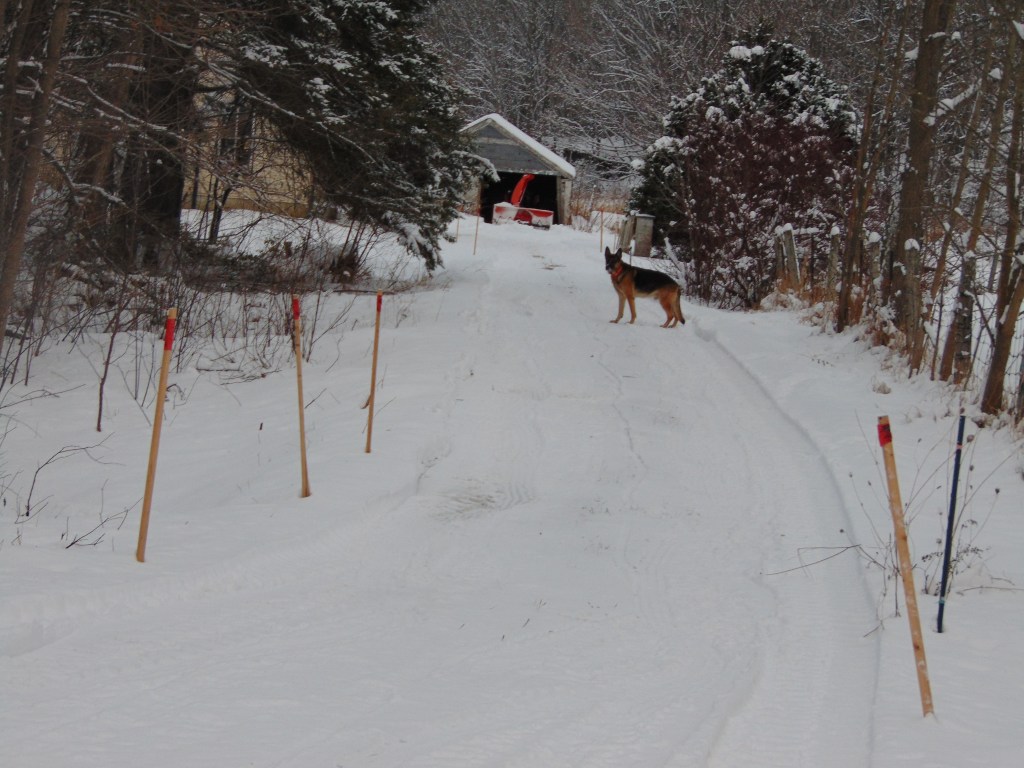
These thoughts arose from the morning walk with the dogs after a fresh snowfall. I had found myself falling into that old trap of thinking of a Canadian winter as something to be endured. I saw another dark, snow-squall cloud coming off nearby Lake Huron; but still, blue skies breaking through, and my dogs burying their noses into the snow and savouring fresh scents left overnight by various creatures. Their excitement put me to shame, for not embracing ‘winter as moment.’
It must also be said that for many people winter is surely something to be endured, on top of the tragedy they’re already suffering. The people of Ukraine come readily to mind, as Putin’s Russia seeks to destroy essential infrastructure and make winter unbearable for them. Meanwhile, there are people not that far away in Canada who are cold and homeless this winter. Those are also examples of ‘winter as moment,’ but in the worst sense of the expression.
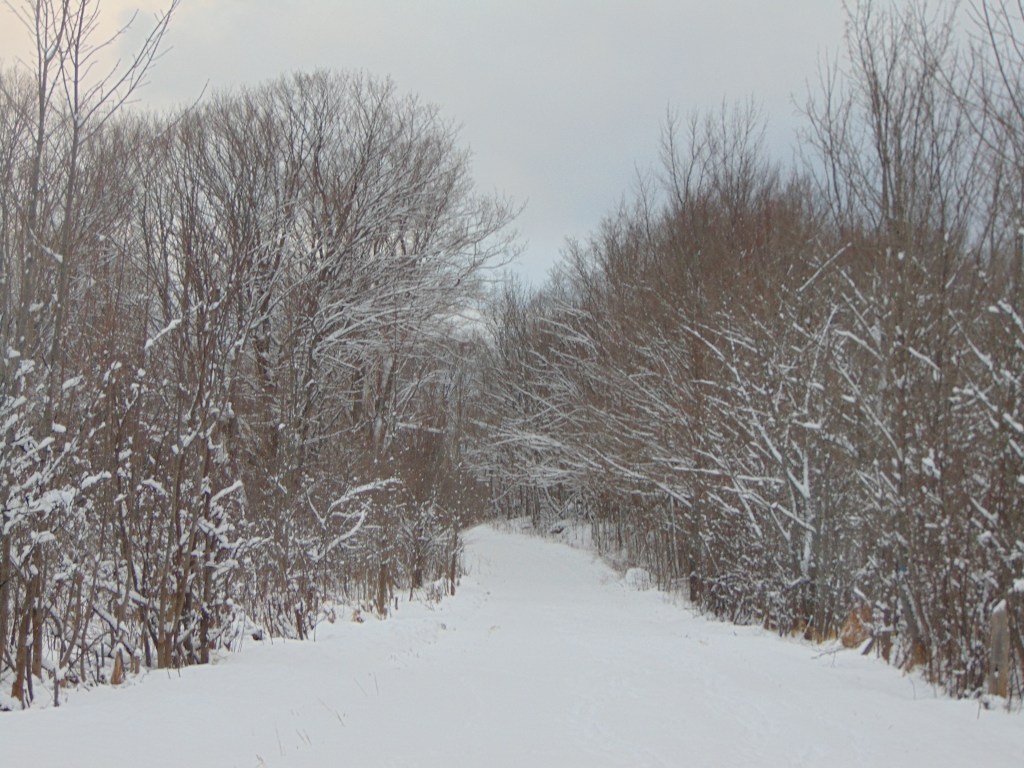
“The woods are lovely…

“…Dark and deep,
But I have promises to keep,
And miles to go before I sleep,
And miles to go before I sleep.”
That last profoundly mysterious verse from Robert Frost’ great poem, Stopping by Woods on a Snowy Evening, came to mind as I walked the dogs down Cathedral Drive just after sunset.
Great poems come in different ways: in some the wording is complex, thoughtful, and for some readers, obscure to a degree or more regarding the meaning. In others, like Stopping by Woods, the wording is simple and straightforward, while seeming to be perfectly well-chosen. It’s as if the poet doesn’t want the words – too many, and too heavy – to get in the way. I think it’s true to say a great poem often essentially writes itself. The words come on a wave of inspiration, and the poet has a sense they are merely the vessel through which the words flow. The same goes with great music. Still, there may be skillful work to do, to carefully polish the gem without ruining it. Stopping by Woods is that kind of great poem, and a miracle of words because so much of what it says is without words.
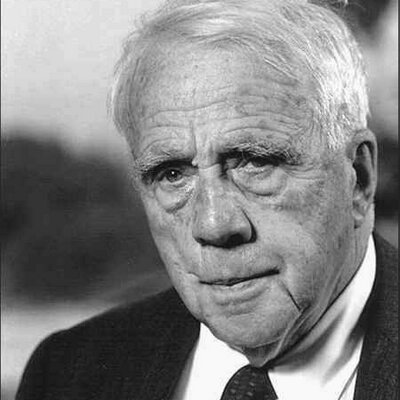
The opening line, for example, “The woods are lovely, dark and deep.” I go back to that time and time again, as I did this evening, knowing full well what it’s about in my heart and soul, after almost 80 years of life on this little jewel of a planet: so wonderful, so troubled, so joyful, yet so terribly heartbreaking and too often hard to bear.
We all grow weary, do we not? It is the tragic sense of life, my children, my friends, my fellow member of the human family. We all share it, one way or another, and we all have our own way of dealing with it, or not.
So yes, no doubt there is a tree, under which a man could lay down and find some rest, snow and cold or not. Yes, it is a “consummation devoutly to be wished,” to quote Hamlet’s “To be, or not to be” soliloquy. Now there’s a poet, Shakespeare, who knew a thing or two about ‘the tragic sense of life’ and all the bittersweet rest of it, to be sure.
In Stopping by Woods, Frost finally speaks of having “promises to keep, and miles to go before I sleep.” His repetition of that last line is the most perfect expression of the mood, the fate we all share, the need after all to “keep on keeping on,” as many of us often say in our plain-speaking way.
What I saw that helped me feel hopeful about keeping on, and hopeful for what tomorrow might bring for the world in general, was the line of setting-sun light on the horizon, beyond the woods, below the clouds.
I took it as a sign. One never knows what the next moment will bring, something good, something wonderful, a new day in every sense.
.
Perfect storm of summer-warm Great Lakes waters, and a cold wind pulled south by the plunging jet stream focuses the mind on one thing: snow removal

But this is mid-November! Even here in Ontario, Canada 90 centimeters of snow in two days in the fall of the year, and more of the same forecast for the next two days is not normal. Not to mention across the border with the U.S., Buffalo, New York has been buried under twice that much snow. That also is on account of ‘lake effect’ snow squalls forming over Lake Erie, Lake Huron further west, and maybe even Lake Ontario. to the north. Once on their way those squall lines can track across hundreds of miles, or kilometres.
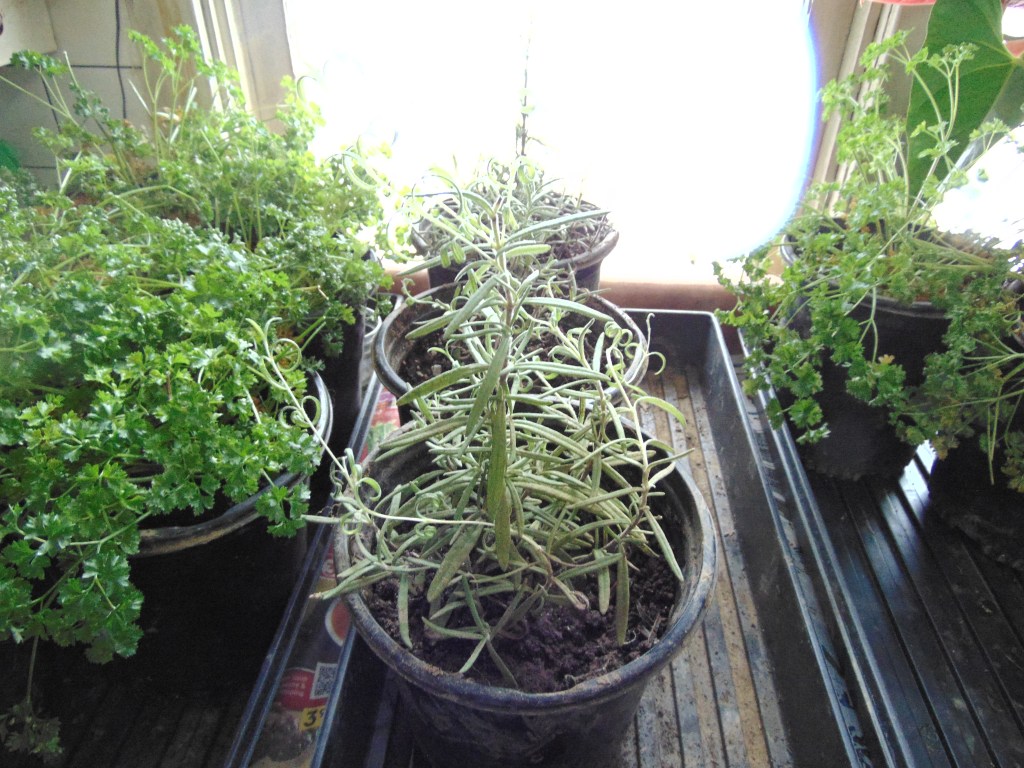
It’s worth noting that up until this past Friday, November broke records in Ontario for summer-like temperatures. Here at the end of Cathedral Drive, on the Bruce/Saugeen Peninsula, near the shores of both Lake Huron and Georgian Bay, the temperature reached the mid-20s Celsius, or mid-70s Farenheit. Two days before the Friday night snow squall hit, I transplanted some Lavender plants. I was worried that was maybe too late, that heavy frost before snowfall might do them in. But now? No problem: the lavender is safe, sound and relatively warm under a thick blanket of snow. The soil might not even freeze if much of that blanket remains, and I think it will. Indications are, including a seasonal, winter forecast I saw months ago, that it’s going to be that kind of winter: long, cold, and snowy. The thick snow blanket will also be good for the garlic I planted a month ago.
Yes, there is a bright side to this unusual weather, extreme, one might even say. I know, tell that to those folks in Buffalo who can’t find their cars because they’ve been buried under 6 ft of snow, So, I hasten to add, I feel your pain, and I sympathize. The last couple of days have been interesting to say the least, here at Cathedral Drive farm. And I can’t wait to find out what the next two days will bring by way of challenges, let alone the rest of winter.
Not to belittle what city folks are going through, especially in Buffalo, but country life has it’s own type of challenges. For example, above all everything depends on being able to get around by car or truck, or horse and wagon, whether it be to the grocery store in a village some 8 kms away, or anywhere. And that, as we all know, that starts with the driveway.
So when I woke up early Friday morning as usual when it was still dark, and let my two dogs out the back door for their morning pee, one look at snow already up to my knees told me whatever I had planned the day before for this new day, was kaput. Even Sophie the Cockapoo, took one look and didn’t want to go out. Buddy my big, beautiful German Shepherd, plunged right in, disappearing into the darkness to check out this sudden, drastic change in the nature of his territory. As for me, I put on my boots, plugged in the long extension cord, and headed for the garage to turn on the tractor’s block heater. On the way I gave myself a pat on the toque for having the presence of mind to connect the snowblower a few days before, despite the warm weather. It had been up by the barn since the last time it was used early last spring. I shuddered at the thought of how hard it would have been to do it under these conditions. The need to get busy and clear the driveway before the snow got much deep deeper was pressing. It’s not a big, two-augured blower; and though it normally does the job, this was not normal and it has its limits.
About an hour later, the tractor/snowblower and I plunged into the snow. Whoops, let’s give that another try with the blower a little higher. That worked, and that became the procedure: a bit at a time, forward and back, up and down, to get the first pass done down the long driveway to the road. Then it was easier, taking the next two passes on either side overlapping with the first.
Oh, did I mention I got stuck, that I went a little too far on one side, where there was a slope near a culvert? Well I did, and for a while I thought that might be the end of my snowblowing for the day and perhaps longer. But let’s just say, you find a way, and/or the tractor/snowblowing gods smile, and life goes on. The next urgency was shovelling at least a tonne of snow off a couple of roofs at risk
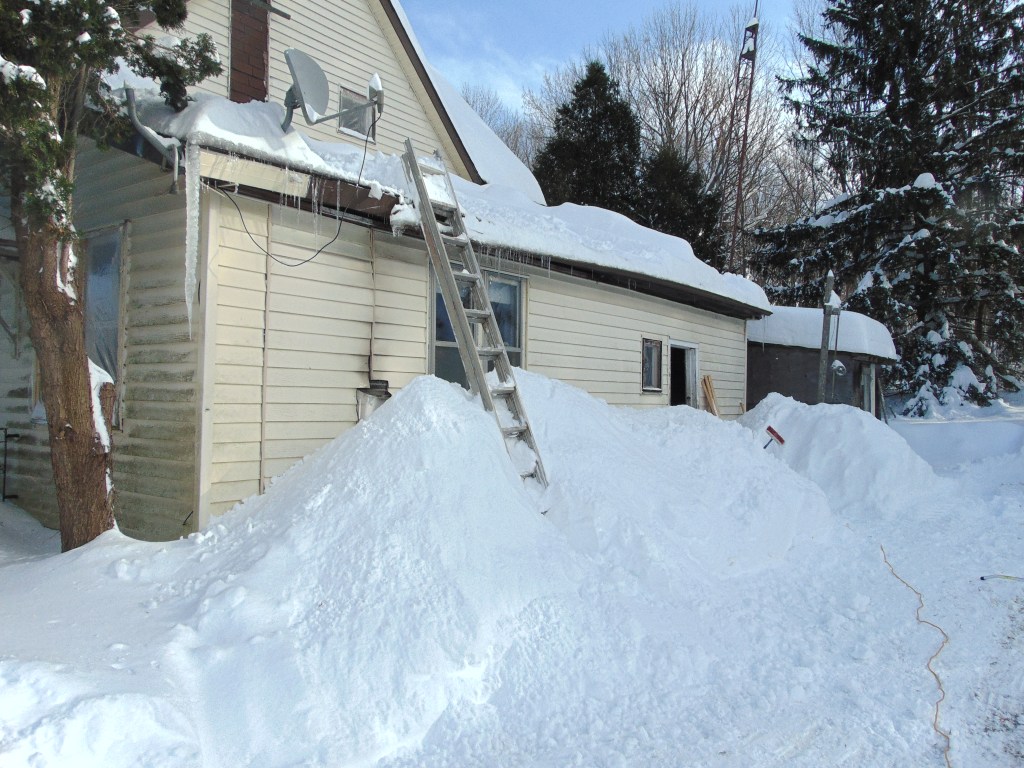
A few ups and downs continued to happen during this snow squall ‘event,’ and no doubt there will be more. You keep on keeping on. There are neighbors willing to help, and vice versa, if need be. But you know they’ve got their hands full too. Later there were some “are you okay?” calls both ways.
That’s also the way country life goes, and I know for a fact that’s true of city life too. Trust me, there are lots of good people in the world, down the road or the street, or one the other side of the world. That’s one of the things you find out when the weather chips deal you a challenging hand.

 Finding Hope Ness