Omar Khadr has a lot to offer the world, including hope

There was no shortage indeed of tragic and troubling events in the world and Canada this past week:

  • The continuing tragedy of more than 200 out-of-control wildfires in B.C. and the evacuation of close to 15,000 people from their fire-threatened, and now possibly destroyed, homes.
  • News that more than two-thirds of Canadians, according to a usually reliable Angus-Reid poll, oppose the Canadian government’s payment of $10.5 million compensation to Omar Khadr for the failure of previous Liberal and Conservative governments to defend his Constitutional rights when he was a tortured, teenage prisoner in American military custody.
  • The “bombshell,” and still unfolding revelations that senior members of the then-Trump election campaign, especially Donald Trump Jr., met with a Russian lawyer, after they were led to believe that lawyer had incriminating information about Democratic candidate Hillary Clinton that was part of a Russian government effort to help Donald Trump win last year’s U.S. presidential election.

And then, in the midst of all that, comes news that an “iceberg” bigger than Canada’s smallest province, Prince Edward Island, has broken off a huge Antarctic ice shelf.

larsen c

Larsen C breaking off.

An iceberg indeed! The Larsen C now-former piece of Antarctica weighs a trillion tonnes, and is 5,800 sq kms in size. It’s called Larsen C because it follows the “calving” of two other giant sections, A and B, off the Larsen Ice Shelf, in 1995 and 2002 respectively.

“The (Larsen C) iceberg is one of the largest recorded and its future progress is difficult to predict,” Adrian Luckman, the lead investigator of the British-led Project MIDAS, which has been monitoring the ice shelf for years, said in a Thomson-Reuters news report. Continue reading

We must learn how to live, and love, together.


DSC_0013

She’s looking right at you with that questioning look, deep into your heart and mind. What will you say and, more importantly, do in reply?

It’s one thing to talk reconciliation, between Indigenous people and other Canadians; it’s another thing to make it happen. We’re being reminded of that lately on an almost daily basis as many in the country celebrate this brave, and relatively new experiment in multicultural living called Canada. Continue reading

My “cool” garden, Toronto Island flooding, and “the old fogy days.”

DSC00300

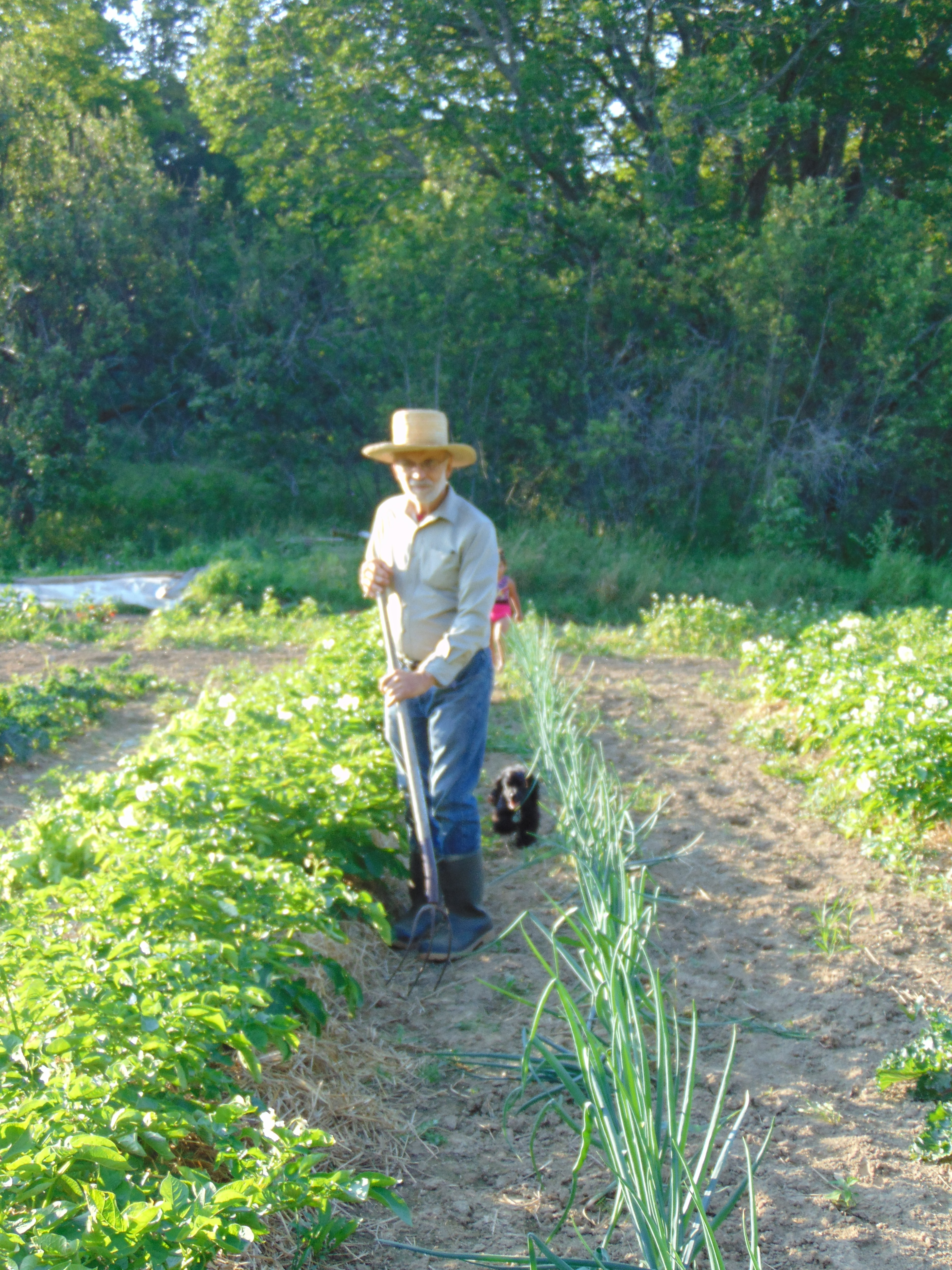
My “cool” garden, with lettuce thriving and in need of picking and thinning

If a picture is worth a thousand words, I might say this is, therefore, a 2,000-word update on the progress of my “cool” garden. But I better make allowances for the fact they’re two views from different angles of essentially the same picture and call it 1,000 words. Nothing but “real” news here, by golly. Continue reading

Still waiting for summer

DSC00297

My “cool” garden. Not doing too bad. Those are potato plants in the foreground, mulched with straw to deter potato beetles, and add organic matter to the soil.

My “cool” garden is doing okay despite the unusually cool, wet weather. After all, up to a point that’s what early-season crops like peas, potatoes, onions, kale, and lettuce like – up to a point. But they won’t thrive either without their good, old-fashioned share of sunny days and warm weather.

I’ve lived in southern Ontario for a good many years (indeed, I’ve got another birthday coming, and that will make me of an age that surprises even me) but I’ve never seen anything like this: Continue reading

A good year to speak and do truth

150th

I admit my initial reaction to the criticism heaped on Canada’s Governor-General David Johnston for referring to Indigenous people as “immigrants” in a CBC-radio interview was that he had walked into a thorny patch of political correctness.

But a moment of reflection soon set that knee-jerk reaction aside as I realized the absurdity of what the Governor-General had said on the recent the weekly episode of The House:

“We’re a country based on immigration, going right back to our, quote, Indigenous people, unquote, who were immigrants as well, 10, 12, 14,000 years ago.” Continue reading

Sickening

chickens

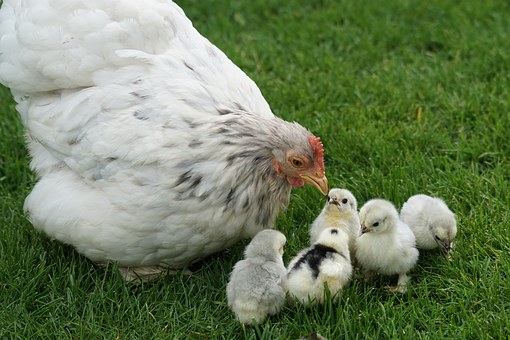
Anyone who says that life matters less to animals than it does to us has not held in his hands an animal fighting for its life. The whole of the being of the animal is thrown into that fight, without reserve.” (Elisabeth Costello, in J. M. Coetzee’s The Lives of Animals)

I had just left Owen Sound and was on my way home after the weekly trip to run a few errands and do some shopping when I first heard the news about an animal rights group having released a video of alleged abuse of chickens at a poultry factory-farm near Chilliwack, B.C.

The radio-news report said the alleged abuse involved people hired as “chicken catchers” to gather up chickens, and pack them in shelves of plastic cages for shipment by truck to plants for slaughtering and further processing.

Before he continued the CBC reporter warned the description of the details might be difficult for some people to hear. And so they were. Continue reading

Power in high places, and the tragic failure of a lack of self-awareness


FDR memorial

U.S. President Franklin Delano Roosevelt’s great words remembered at his memorial in Washington, D.C. As true and timely now as ever, perhaps even more so.

I’ve said it before, but it’s well worth repeating because of recent, bull-in-a-china-shop events in world affairs: self-awareness is a really important thing. Continue reading

The unbearable weight of stuff

DSC00288

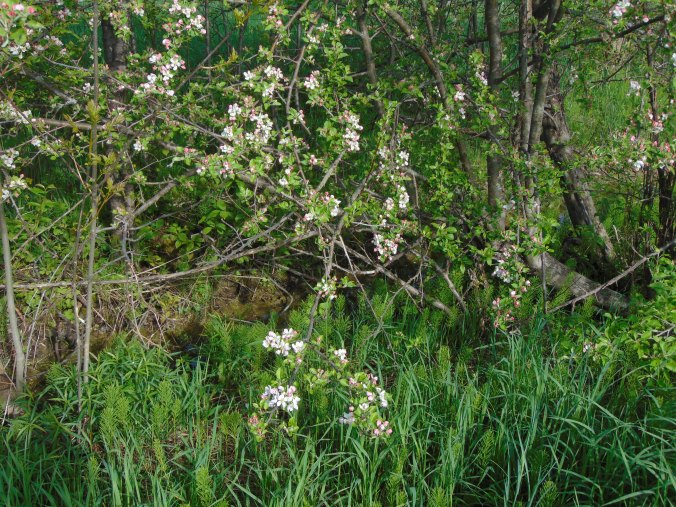
Blossoms on a roadside, wild-apple tree. And good apples they are too, as I discovered last fall. Not sure what this has to do with “stuff” and garbage. But it sure makes a better sight, or site.

What will they think of us, those otherworldly beings, when thousands or millions of years from now, they reach whatever is left of our world and can hardly believe what they find?

So much garbage – deep mounds of it in what we euphemistically called “landfill sites.”

Or, if their arrival is far enough in the future, maybe the space travellers will find places where seismic acitivity has exposed thick layers of a peculiar rock largely composed of fossilized garbage; and, here and there, scattered bits and pieces of stuff  that remains strangely intact: a child’s plastic toy, a small lockbox full of keepsakes and trinkets, a porcelain bluebird on the wing.

The strangers will turn those things over and over in their hands – or whatever – and wonder at the apparent ingenuity of the long-gone beings who created such things. But they will also be appalled and confounded by the shear volume of our waste. Continue reading

Ontario’s forest flower

DSC00287

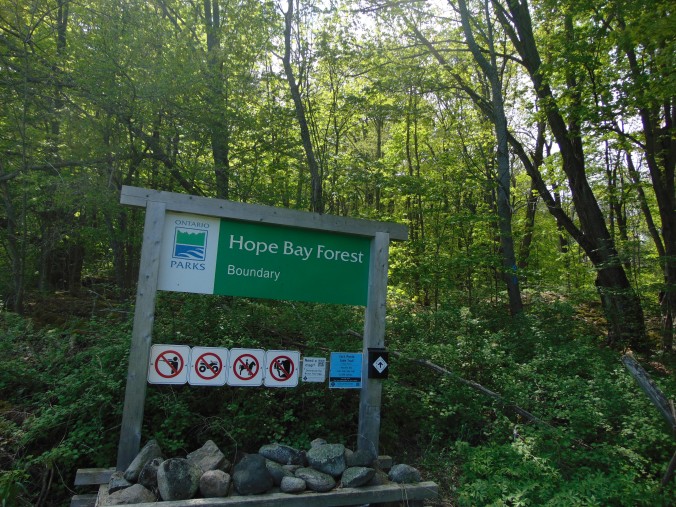
One of the most pleasant, accessible short hikes on Ontario’s famous Bruce Trail begins here, at the end of Cathedral Drive in Hope Ness, on the Bruce Peninsula. And right at the end of my driveway too, by the way.

Depending how leisurely you want to walk, Hope Bay is more or less a two-hour hike south. Or, conversely, a two-hour hike north from Hope Bay to this point.

If you start here, about 15 minutes in you’ll want to take a side trail to the cliff edge overlooking Hope Bay, reaching out in the distance to the broad, blue expanse of Georgian Bay.

I try to walk to the lookout, which I regard as a very special place, at least once a week. A few days ago on the way I saw the trilliums were starting to bloom. But I didn’t have my camera with me. Sometimes I would just as soon let the fleeting moments of natural beauty have their freedom, rather than capture them.
DSC00286

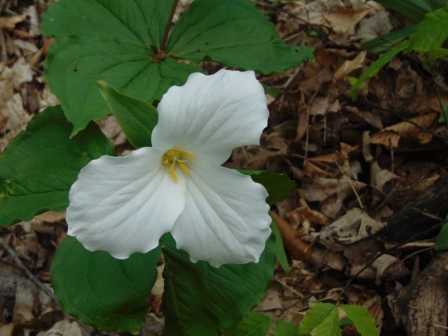
But this morning, to keep a promise, (Hi, Julie) I took a short walk in with my camera to take a few photos of the Province of Ontario’s official flower to post here. Trilliums are mostly white. But I saw quite a few of the rarer, delicately mauve variety.

Not everyone gets to live beside the Hope Bay Forest, so I hope you enjoy these few photos: Continue reading