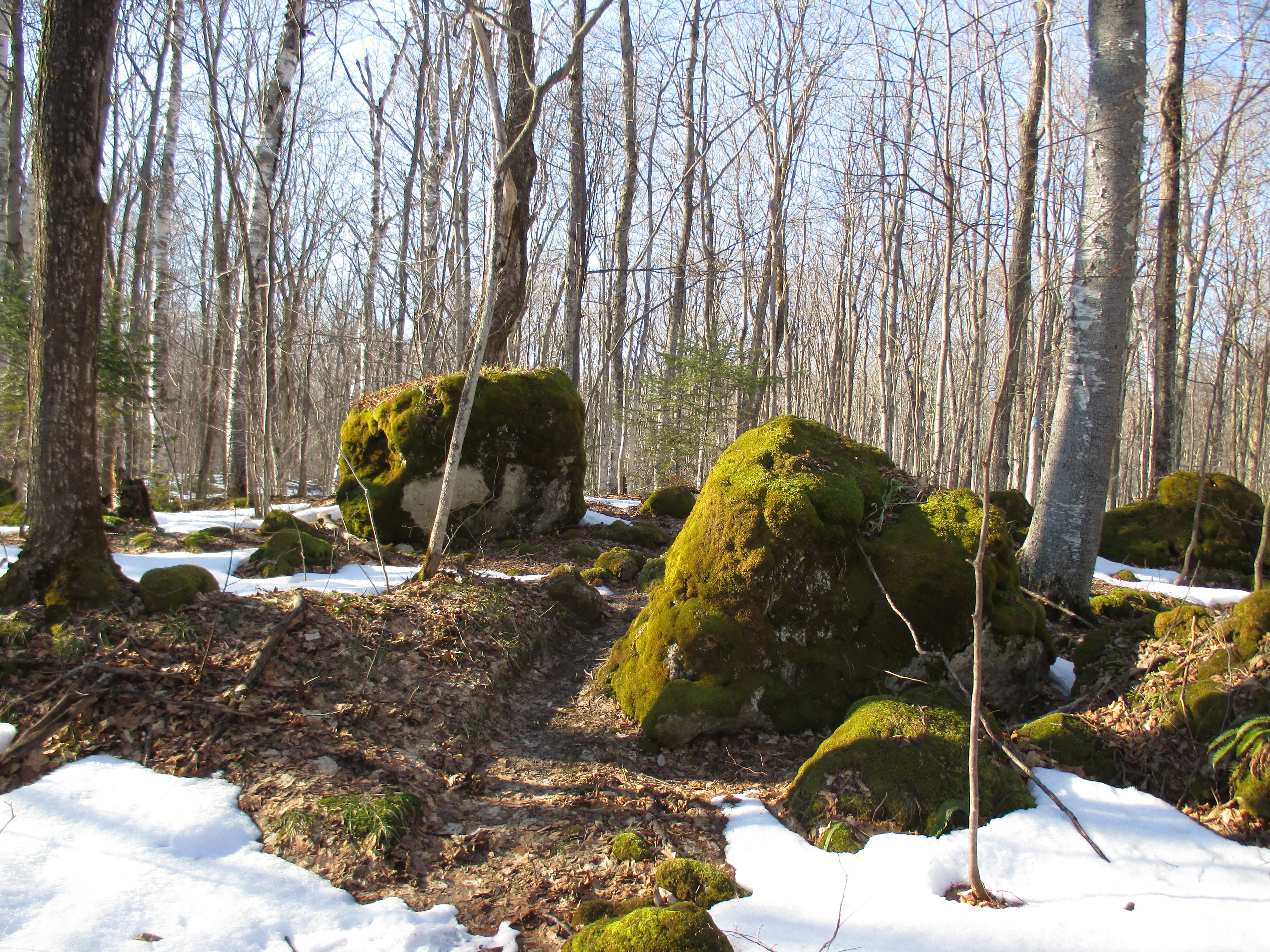
 Oh, if only these rocks could talk, what a story they could tell about how they got here thousands of years ago. They were part of what’s now called the Canadian Shield, a primeval formation of igneous rock, forged over many millions of years. When the vast glaciers of the last ice age began their slow, relentless march south, these rocks were broken off the shield and pushed south by the immense power of the ice. So great was the weight of the ice, several kilometers thick, that it tilted the eastern edge of an ancient sedimentary rock seabed upward, thus creating the unique, cliff-edge rock formation we call the Niagara Escarpment. When the ice age waned, and the ice began to melt and retreat, these rocks were left right here, where you see them now, on the section of the Bruce Trail from Hope Ness to Hope Bay, on the Bruce (Saugeen) Peninsula.
Prior to 1854 the peninsula was the home and exclusive territory of the Saugeen Ojibway Nations, the Chippewas of Nawash First Nation, and the Saugeen First Nation. As a result of Treaty 72, signed that year under duress and and other questionable circumstances, the two First Nations ‘surrendered’ most of what remained of their territory and were left with several relatively small reserves. Even so, in 1857, the Nawash people were compelled to move from their community near the present-day city of Owen Sound to make way for the new, non-Indigenous town’s expansion. The name of the Saugeen Peninsula, as it was known before 1854, was changed to Bruce Peninsula, after the name of the Governor-General of the Province of Canada, which was still a British colony at the time. Canada, an independent and sovereign country, is a Constitutional Monarchy, with a legal obligation to uphold the ‘honour of the Crown’ regarding treaties First Nations.
In 1994 the Saugeen Ojibway Nations (SON) took the unusual step of filing a land-claim lawsuit in the Ontario Superior Court of Justice. The action claims the honour of the Crown was breached by the manner in which Crown negotiators negotiated Treaty 72. It also claims the Crown failed in its Fiduciary duty to protect SON territory from incursions of non-Indigenous squatters as promised when an earlier treaty was signed. That 1836 treaty ‘surrendered’ the larger part of Saugeen Territory south of the Saugeen Peninsula, as far south as present-day Goderich on the Lake Huron shore, and west as far as the Nottawasaga River near present-day Wasaga Beach. Crown negotiators said they were unable to stop trespassing in that huge area. The two First Nations only agreed to sign the 1836 treaty on the promise that their territory on the Saugeen Peninsula would be protected “forever” by the Crown from further trespass. But again, in 1854, the Crown negotiators said they couldn’t stop the trespassing. The trial into the SON lawsuit began in April, 2019. During the trial, which ended in the fall of 2020, SON presented evidence that showed that was a lie.
On July 29, 2021 Justice W. Matheson’s 211-page judgement was presented to the court and made public. It found in favor of key elements of SON’s claim related to Treaty 72, including that Crown negotiators breached the ‘honour of the Crown.’ However, the judgement denied SON’s claim for a declaration of Aboriginal Title to the lakebed under a large part of Lake Huron on both sides of the Bruce (Saugeen) Peninsula. Phase 2 of the case will determine the amount and method of compensation owed the Saugeen Ojibway First Nations. But that won’t start until after any appeals of the judgement are heard.
Hope Ness was almost destroyed more than 50 years ago when the Dow Chemical Company wanted to develop a huge quarry to mine the limestone bedrock for its rich magnesium content. The plan included a large shipping facility at the foot of the Niagara Escarpment at nearby Hope Bay. The plan did not proceed for reasons that were never clear. It may be the market for magnesium crashed; or it may be that in the mid-1960s the Ontario government was already developing a plan to protect the Niagara Escarpment, and political pressure was applied. At any event, Dow had already bought up most of the farms in Hope Ness when the quarry plan was dropped. The company offered Hope Ness farmers $5,000 for their 100-acre farms, and all but a few accepted, though it caused grief and bitter discord and in some homes. Most of the homes and barns were demolished. One exception was the home and barn on the property I now call home. It survived only because Dow used it as its on-site base of preliminary testing. So, although the natural environment of Hope Ness escaped disaster, the homestead community, the sons and daughters of pioneer settlers, was devastated. The Ontario government soon acquired that land and to this day still owns most of it. A large portion is now the Hope Bay Nature Reserve, a provincial park. More details of the story of how all that happened, and other aspects of the history and continuing existence of a special place can be found here in this blog, Finding Hope Ness. Welcome.11 Revisions
Oh, if only these rocks could talk, what a story they could tell about how they got here thousands of years ago. They were part of what’s now called the Canadian Shield, a primeval formation of igneous rock, forged over many millions of years. When the vast glaciers of the last ice age began their slow, relentless march south, these rocks were broken off the shield and pushed south by the immense power of the ice. So great was the weight of the ice, several kilometers thick, that it tilted the eastern edge of an ancient sedimentary rock seabed upward, thus creating the unique, cliff-edge rock formation we call the Niagara Escarpment. When the ice age waned, and the ice began to melt and retreat, these rocks were left right here, where you see them now, on the section of the Bruce Trail from Hope Ness to Hope Bay, on the Bruce (Saugeen) Peninsula.
Prior to 1854 the peninsula was the home and exclusive territory of the Saugeen Ojibway Nations, the Chippewas of Nawash First Nation, and the Saugeen First Nation. As a result of Treaty 72, signed that year under duress and and other questionable circumstances, the two First Nations ‘surrendered’ most of what remained of their territory and were left with several relatively small reserves. Even so, in 1857, the Nawash people were compelled to move from their community near the present-day city of Owen Sound to make way for the new, non-Indigenous town’s expansion. The name of the Saugeen Peninsula, as it was known before 1854, was changed to Bruce Peninsula, after the name of the Governor-General of the Province of Canada, which was still a British colony at the time. Canada, an independent and sovereign country, is a Constitutional Monarchy, with a legal obligation to uphold the ‘honour of the Crown’ regarding treaties First Nations.
In 1994 the Saugeen Ojibway Nations (SON) took the unusual step of filing a land-claim lawsuit in the Ontario Superior Court of Justice. The action claims the honour of the Crown was breached by the manner in which Crown negotiators negotiated Treaty 72. It also claims the Crown failed in its Fiduciary duty to protect SON territory from incursions of non-Indigenous squatters as promised when an earlier treaty was signed. That 1836 treaty ‘surrendered’ the larger part of Saugeen Territory south of the Saugeen Peninsula, as far south as present-day Goderich on the Lake Huron shore, and west as far as the Nottawasaga River near present-day Wasaga Beach. Crown negotiators said they were unable to stop trespassing in that huge area. The two First Nations only agreed to sign the 1836 treaty on the promise that their territory on the Saugeen Peninsula would be protected “forever” by the Crown from further trespass. But again, in 1854, the Crown negotiators said they couldn’t stop the trespassing. The trial into the SON lawsuit began in April, 2019. During the trial, which ended in the fall of 2020, SON presented evidence that showed that was a lie.
On July 29, 2021 Justice W. Matheson’s 211-page judgement was presented to the court and made public. It found in favor of key elements of SON’s claim related to Treaty 72, including that Crown negotiators breached the ‘honour of the Crown.’ However, the judgement denied SON’s claim for a declaration of Aboriginal Title to the lakebed under a large part of Lake Huron on both sides of the Bruce (Saugeen) Peninsula. Phase 2 of the case will determine the amount and method of compensation owed the Saugeen Ojibway First Nations. But that won’t start until after any appeals of the judgement are heard.
Hope Ness was almost destroyed more than 50 years ago when the Dow Chemical Company wanted to develop a huge quarry to mine the limestone bedrock for its rich magnesium content. The plan included a large shipping facility at the foot of the Niagara Escarpment at nearby Hope Bay. The plan did not proceed for reasons that were never clear. It may be the market for magnesium crashed; or it may be that in the mid-1960s the Ontario government was already developing a plan to protect the Niagara Escarpment, and political pressure was applied. At any event, Dow had already bought up most of the farms in Hope Ness when the quarry plan was dropped. The company offered Hope Ness farmers $5,000 for their 100-acre farms, and all but a few accepted, though it caused grief and bitter discord and in some homes. Most of the homes and barns were demolished. One exception was the home and barn on the property I now call home. It survived only because Dow used it as its on-site base of preliminary testing. So, although the natural environment of Hope Ness escaped disaster, the homestead community, the sons and daughters of pioneer settlers, was devastated. The Ontario government soon acquired that land and to this day still owns most of it. A large portion is now the Hope Bay Nature Reserve, a provincial park. More details of the story of how all that happened, and other aspects of the history and continuing existence of a special place can be found here in this blog, Finding Hope Ness. Welcome.11 Revisions
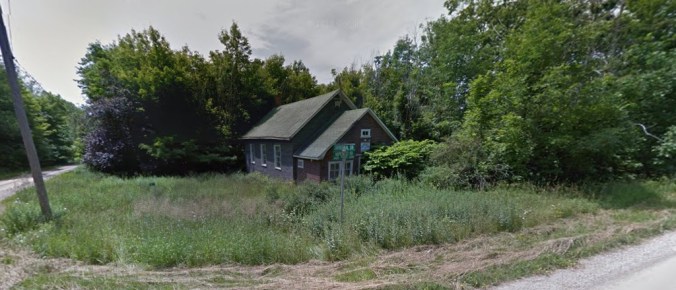 Any discussion here of the history of Hope Ness will include respect paid to the fact First Nation people lived here for many thousands of years before European settlers, mainly from the British Isles, started arriving less than 150 years ago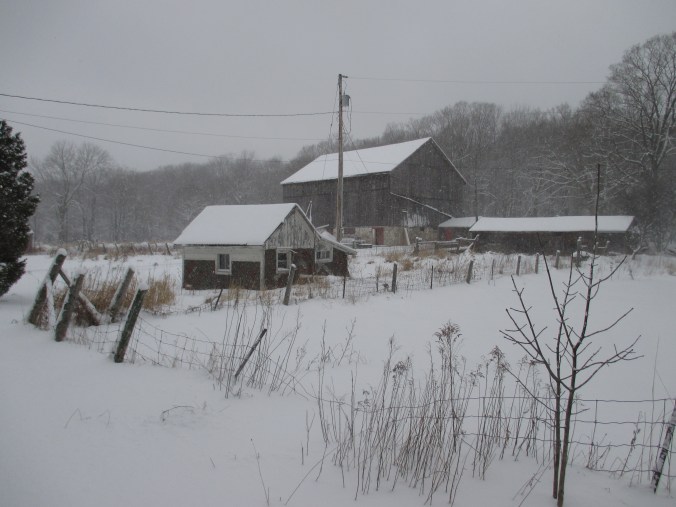
 Finding Hope Ness