The old barnyard comes alive

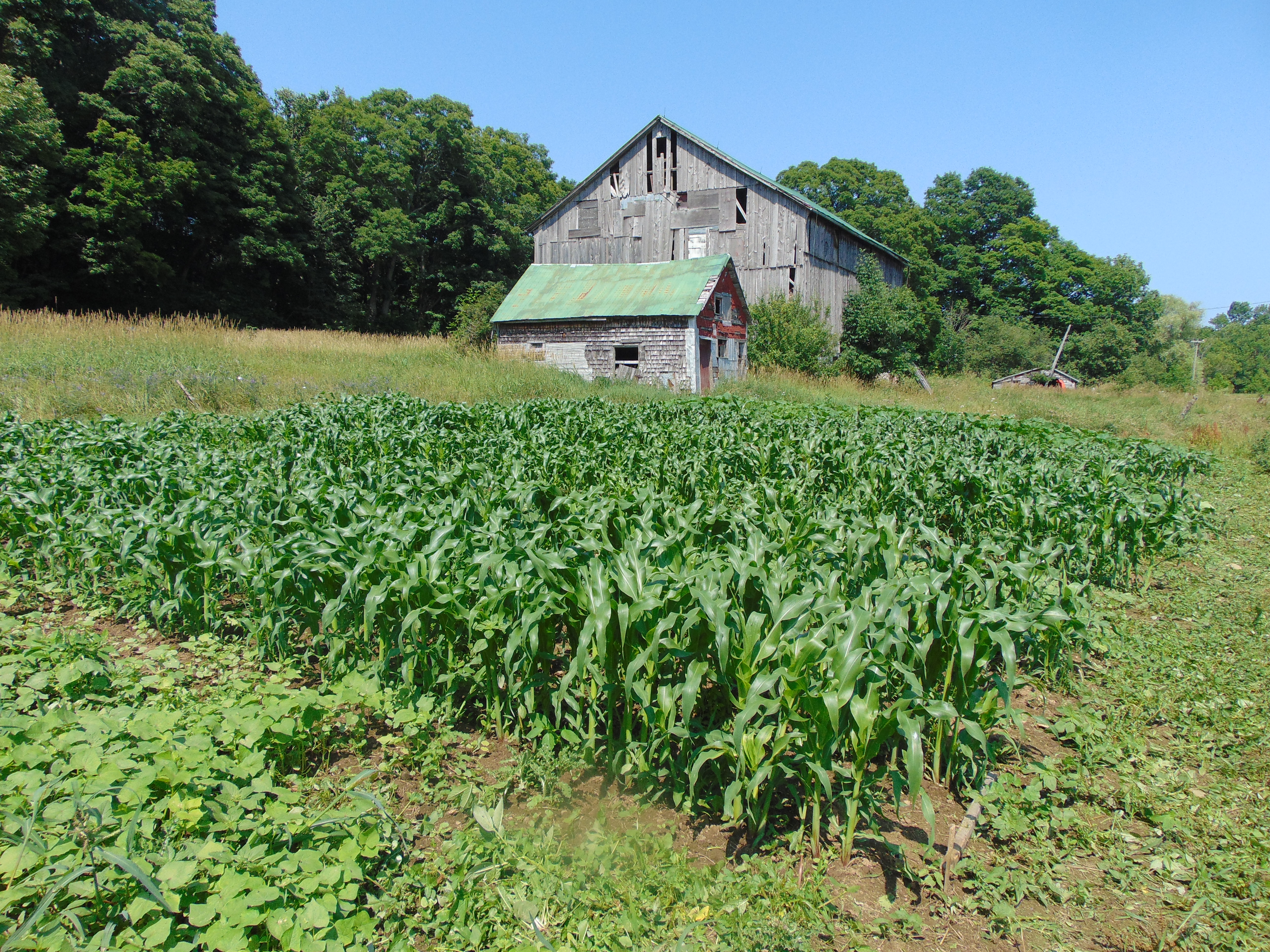
DSC00627In the spring of 2022, I finally put two and two together and decided the time had come to work up the ground in part of the old barnyard to see if that might be a better place to grow vegetables.

My two existing garden plots closer to the house have poor drainage and low fertility issues that seem to aggravate the already challenging characteristics of the heavy clay loam soil. A few days without rain and it turns into the dreaded, unworkable hardpan. Not ideal for gardening, to say the least. The use of lots of straw mulch to help keep moisture in the soil, and to be worked into it after harvest, hasn’t seemed to seem to help much in the seven years I’ve been gardening here.

Meanwhile, the barnyard sloped gently and naturally toward my small portion of the old hay field. (The greater portion, stretching west between the forest on either side is now part of the Hope Bay Nature Reserve. A long story that: see ‘The Day Dow Came to Hope Ness’ in this blog.)

For 100-plus years the barnyard had been fertilized by livestock, beginning in the 1880s as a pioneer homestead, mixed farm. The barn was set up for beef cattle; first, oxen, then horses, were used to till the soil. The first temporary home for the farm family was built near the barn some time soon after John Heath bought the 100-acre lot in 1880 for $100. It eventually became a pig barn after the permanent house was built in 1895.
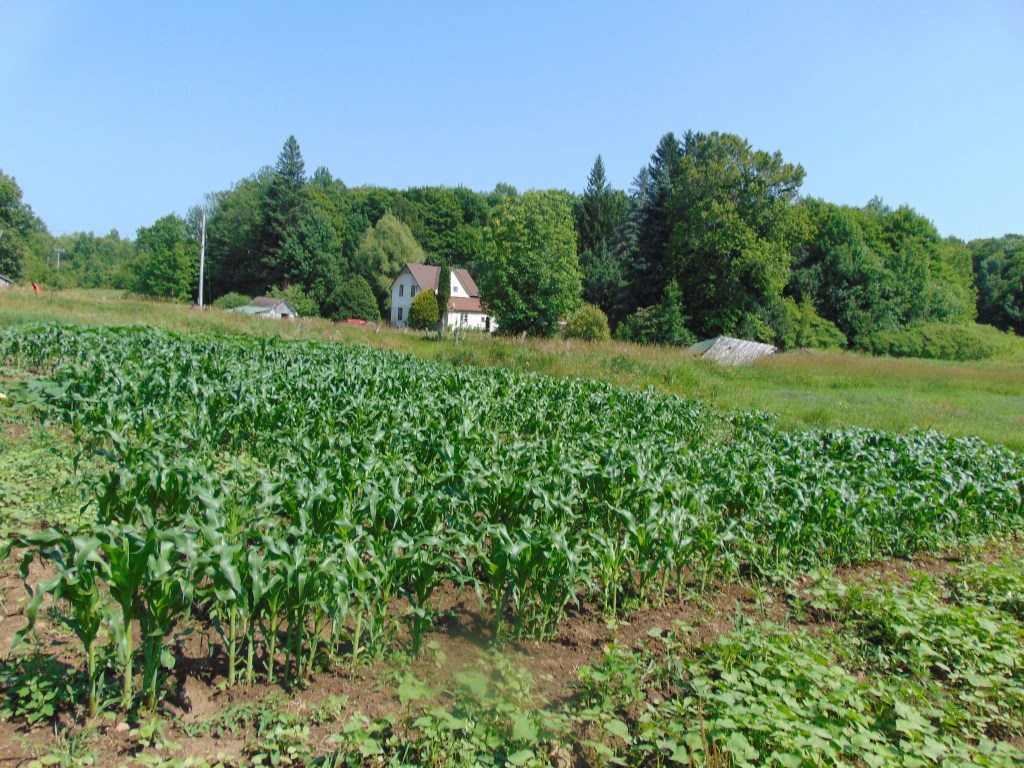
So, it was a given: the barnyard soil was bound to be fertile.

After I had the 2022 season garden planted by the late spring, I first broke the south portion of the barnyard ground with the 1950-vintage Ferguson cultivator. The 1930’s vintage drag cultivator worked best for the final passes. As a cover crop I scattered 50 pounds of buckwheat in early June when the risk of frost had passed. Despite its name, Buckwheat is not a grain, though it is often used like cereal grains. I use it along with wheat flour in my favorite muffin recipe; and I use it as my favorite cover crop because it grows high and dense enough to shade out and discourage the growth of twitch grass. Still a bane of an organic farmer’s existence, twitch grass, also known around the world by other names, such as couch grass in the U.K., is not indigenous to North America. It’s arrival sometime in the early 20th Century quickly spread and became a big problem for farmers and other plants because, among other attributes, it secretes an enzyme that discourages the growth of other plants. It’s no doubt one of the big reasons why Monsanto invented the now much-used herbicide Roundup.

The barnyard was overrun with twitch grass. Two, successive crops of buckwheat, the first mowed down to re-seed itself, is best to discourage twitch grass; but I wanted to plant a garden in the spring of 2023, so I made a point of cultivating before the first frost in the fall of 2022, and in the early spring of 2023 to expose the dense twitch grass root-network to killing cold. I used my 40-year-old TroyBilt rototiller sparingly (two passes – one shallow, one deeper – to prepare the soil for the planting of ‘the three sisters,’ rows of beans, pumpkin, butternut squash, and sweet corn.

Organic Cinderella pumpkin seed was acquired locally, from Franken Farms Seed. Untreated bean, butternut squash, and one variety of sweet corn came from Willian Dam Seeds. My old standby, early peaches and cream sweet corn, also untreated, and not bioengineered, came from Ontario Seed Company (OSC).

I started planting May 26, and finished in the first week of June. But, as Ontario farmers and gardeners know, the 2023 season began with a month-long drought in late May and early June. I hand-watered my three garden plots daily from a dug well. There’s nothing like rain; but I managed to keep the transplanted, started indoors pumpkin and squash alive; However, I feared the untreated corn seed in the new barnyard garden was a loss because the soil temperature was too low for germination; but, to my surprise, three planting of corn came up, at a rate of about 60 percent after the rain. Still, it was a joyful occasion.

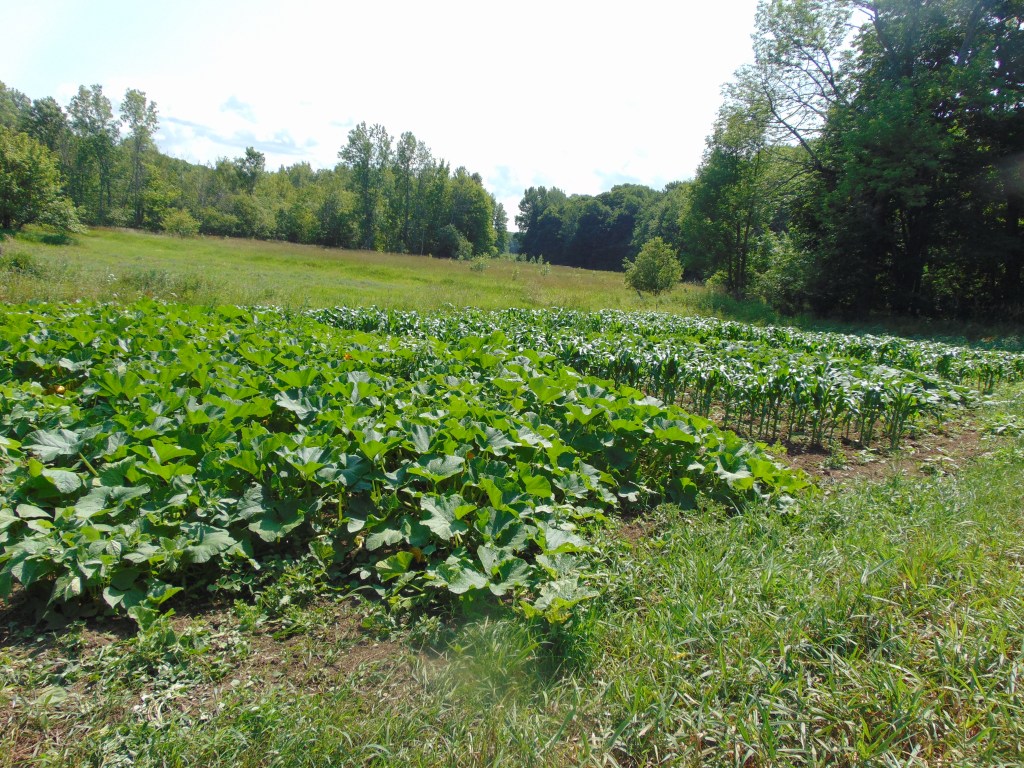
And within a couple of weeks, the new garden in the old barnyard was flourishing. Indeed, I don’t think I’ve ever seen such dynamic growth, especially of the squash family, pumpkins (Cinderella) and butternut squash. Meanwhile, the sweet corn is growing so well I’m not going to bother with the usual side dressing of fertilizer for this heavy feeder.

I also hope in some way to honor those who came before on this farm, and worked so hard, for so little. From the barnyard garden I look out across that long, hay field reaching out to the west in the darkening sky. Soom enough the forest on either side will close in again, and their being here, most of them for less than 100 years, may be remembered only as a brief episode. I feel their tears in the soil as, on my knees, I pull out weeds by hand; but I see little of the twitch grass that drove men mad remains.

I see them smile and hear them say, “well now, isn’t that something. Good for you, young fellow.”
Surrounded by wildlife in Hope Ness

deer

white-tailed deer have been feasting on my sweet peas

I noted with more than passing interest the news that black bear have been making appearances and causing problems in the Shallow Lake area, brazenly killing and eating chickens close to homes, and breaking into wooden garbage containers at Sauble Beach.

There certainly are black bear up here in heavily-wooded Hope Ness, on the Georgian Bay side of the Bruce Peninsula, where I live. I saw a big one from a safe distance crossing the Hope Ness Road out by Bruce County Road 9 a week or two ago just after setting out for a trip to Owen Sound. Most of my  neighbours live out there, compared to where I am at the end of Cathedral Drive. That’s a “No Exit” road that leads to the Hope Bay Forest and a fairly popular section of The Bruce Trail through the mature hardwoods to a wonderful lookout from the Niagara Escarpment cliffs above Hope Bay. Continue reading

More to the Bruce Peninsula than national parks

IMG_0351

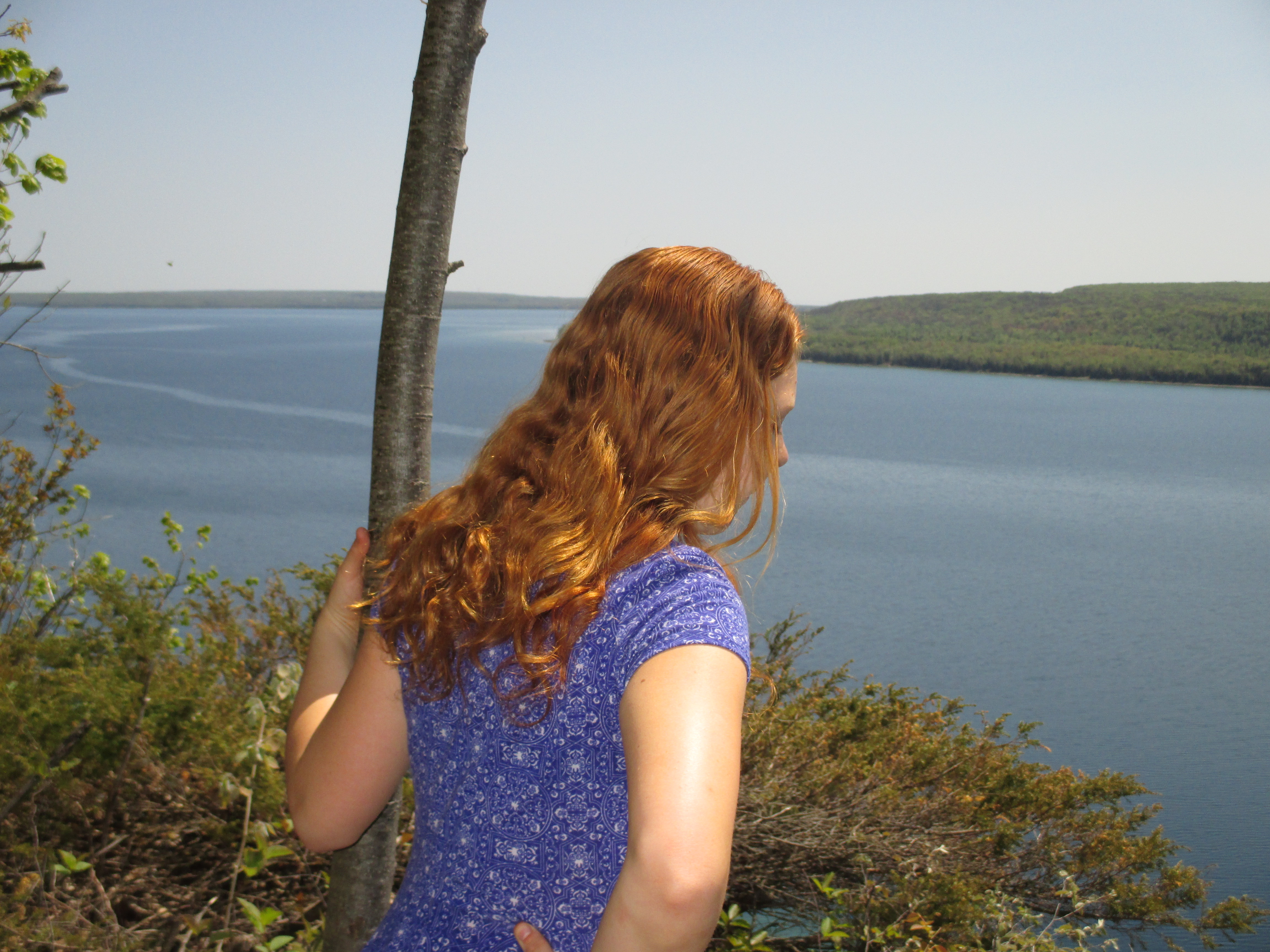
My granddaughter, the irrepressible and delightful Asia at her favourite place, the lookout over Georgian Bay from the Niagara Escarpment cliffs, just a short walk from “the family farm” in Hope Ness on the Bruce Trail.

I happened to be in Wiarton twice the day before the start of the Canada Day long holiday weekend, on my trip to and from Owen Sound to run a bunch of errands. Both times the northbound traffic was as heavy as I’ve ever seen it, in 37 years of living on the Bruce Peninsula. Continue reading

Oh, to be young again

IMG_0425

Granddaughter Mirabella in the Yukon Gold

I don’t like using the expression, but I guess I have to admit to “growing old.” I still feel perky enough after I get up with the sunrise, just before 6 a.m. here in Hope Ness, have my morning coffee or two, or three, and some toast or a bowl of cereal.

My daily “to do” list is longer than ever, so much so that there hasn’t been enough time and energy to do a daily post. I’m always anxious to get an early-morning start with the outside work. I know by mid-afternoon most of that once-boundless energy will be pretty well done for the day. Continue reading

A walk in the promising garden

Let’s go for a little morning walk in the garden. The sun’s out, but clouds are forming, with the prospect of some timely rain. It’s been about a week or so without – nothing too urgent just yet, a few things are in need of watering without rain today. But all in all, if I do say so myself, the garden is looking pretty good.

IMG_0405

The cool garden is looking good

Continue reading

My old friend is being reborn

IMG_0276

Mr. Massey before

There’s a mountain of work to do at Cathedral Drive Farm in Hope Ness these days: weed between the rows, hill the potatoes, spread straw mulch everywhere possible to hold the moisture in the soil and keep the clay-loam soil from baking to hard-pan in the sun, mow the hay, take the wild barn cat his morning dish of milk, prep the downstairs bedroom for painting . . . on and on it goes.

But I’ve got it down pat now: I take a few minutes in the morning after the indispensable two cups of coffee to write the daily to-do list; and then I proceed to ignore it as I just “keep on keeping on” with one thing at a time, or two or three, until the sun begins to set. And then I think it’s about time to see what’s going on in the world and the blogosphere.

But first, this day I went over to “The Shop” to see how Brent was getting on with the restoration of Mr. Massey, my world-famous, and one-of-a-kind, Massey-Harris 22 tractor.

Continue reading

A happy day in Hope Ness

A cool breeze from Georgian Bay to the east was blowing this morning, so it was still toque-weather for me. But those two little ones, and the bigger ones too, were having the time of their lives in the great Hope Ness outdoors.

IMG_20160522_105526 (1)

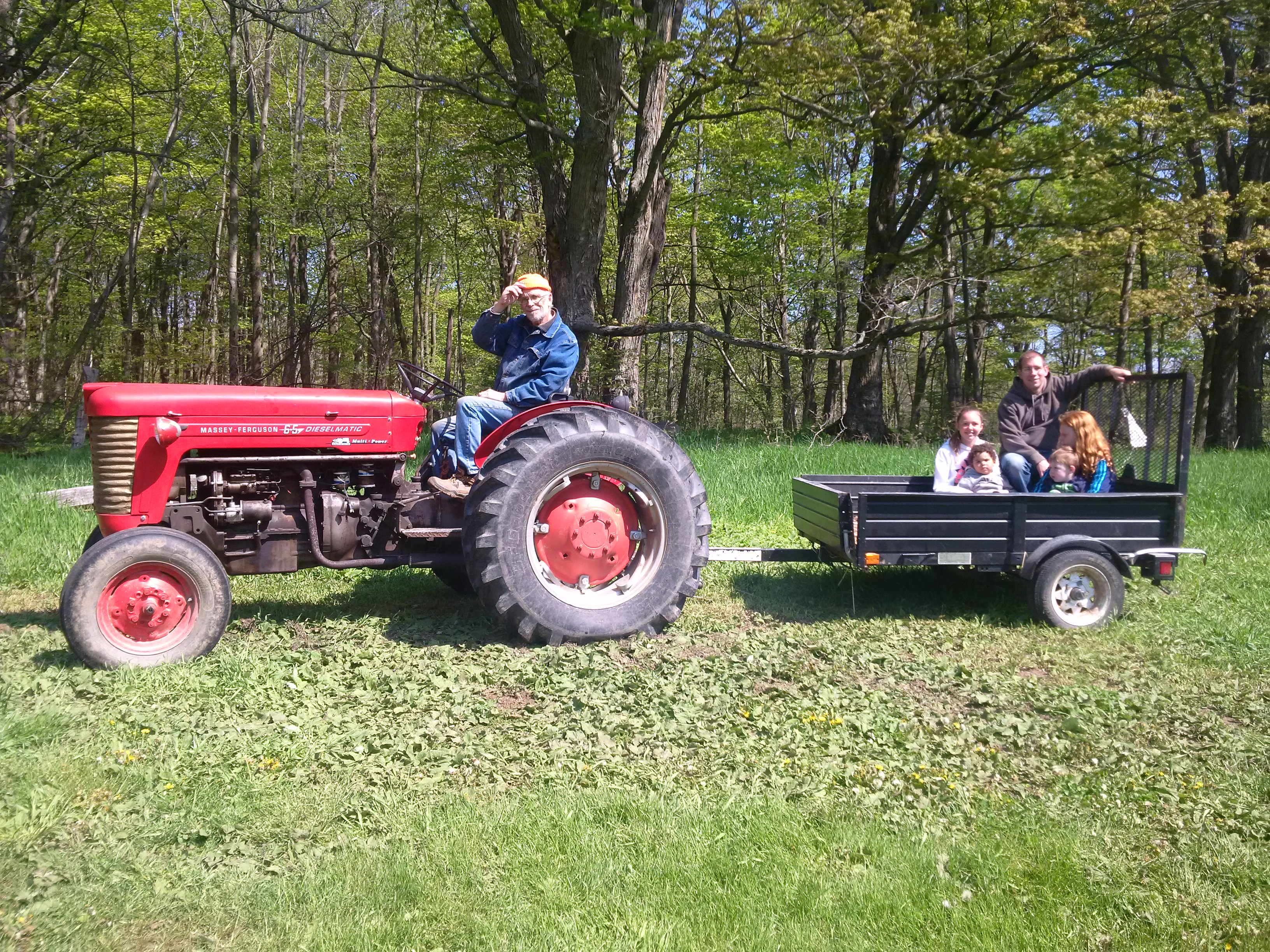
“Grandpa” at the controls of Mr. Massey Too, with Allie, Asia, Jacob, Mirabella, and son-in-law Scott enjoying a trailer ride.

It was a homecoming for my two youngest daughters, Lila Marie and Kathy, who were both born just around the corner and as little children used to visit Wilma and Cliff Butchart at this very Cathedral Drive homestead. Continue reading

A sacred place

This year’s recent Sources of Knowledge (SOK) forum based in Tobermory at the tip of the Bruce Peninsula about an hour north of Hope Ness focussed on First Nation history in this area.

IMG_0178

Hope Bay, looking out to Georgian Bay, from the top of the Niagara Escarpment

I regret having missed it; otherwise, I would have been aware of the special presentation virtually right around the corner from me on the other side of Hope Bay at the Chippewas of Nawash Unceded First Nation Community Centre at Neyaashiinigmiing (Cape Croker).

I’m kicking myself: it may have been a once-in-a-lifetime opportunity to hear much more about the significant archeological work done at Nochemowening. Known in recent years as Hunter’s Point, Nochemowening, is an area of land below the Niagara Escarpment on this side of Hope Bay. It is part of Hope Ness. Continue reading

Set your vision free

The understanding of who you are is within you.

Trapped inside, often for far too long, that clear vision of one’s true self desperately wants out, so it can be free at last to find its right path to becoming real. But things can get confusing, and we can lose our way.

I am reminded of the bird we saw two summers ago, a frantic little creature that somehow got trapped between two window panes in a second-floor room of this old farmhouse.

IMG_0326

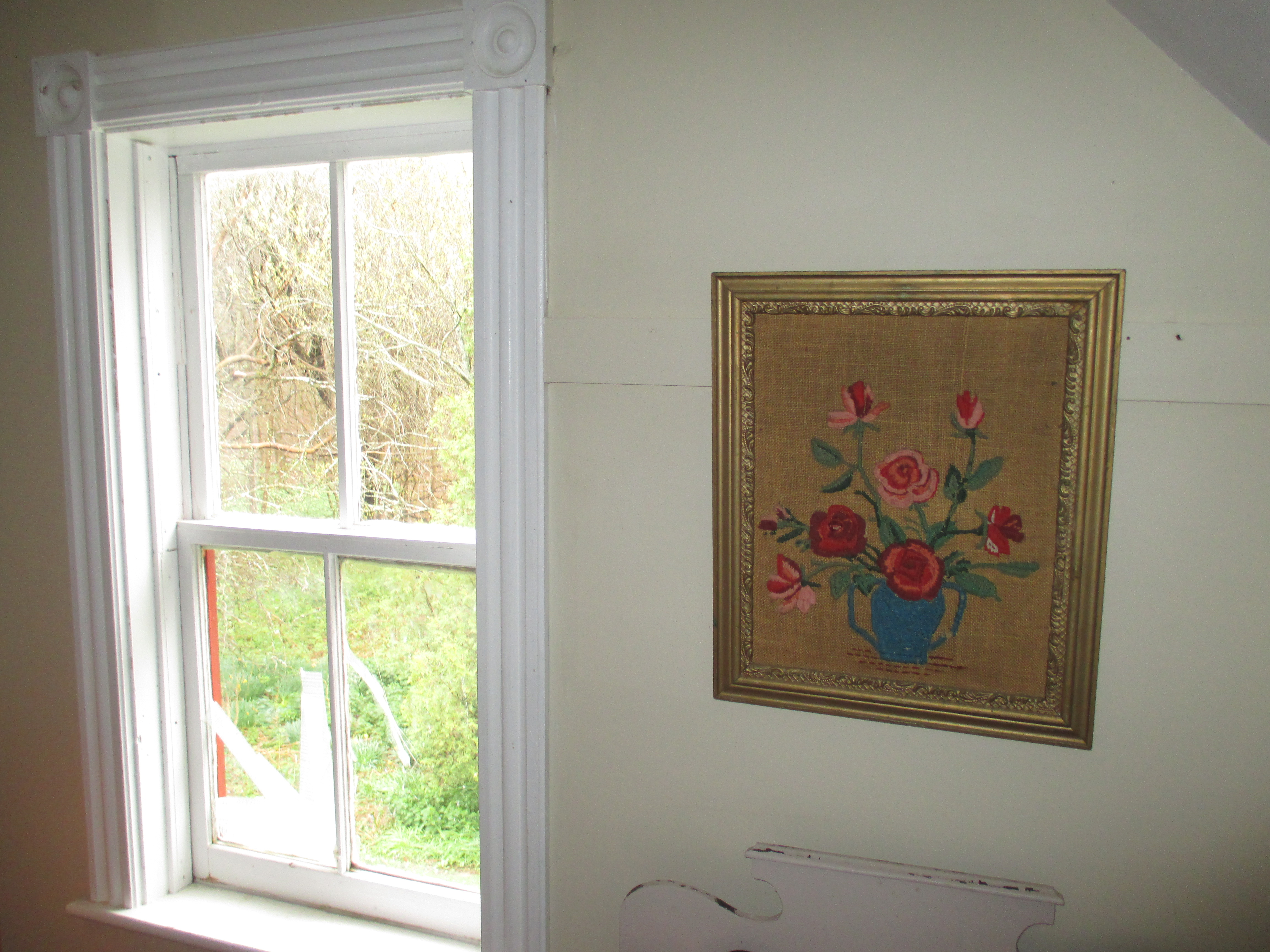
The window where the bird was trapped; and one of Wilma Butchart’s creations

We shared that special moment, didn’t we, my love? It told us something very important. We even knew what it was. But by then I suppose the troubles were already insurmountable.

Continue reading