Life’s ‘small miracles’

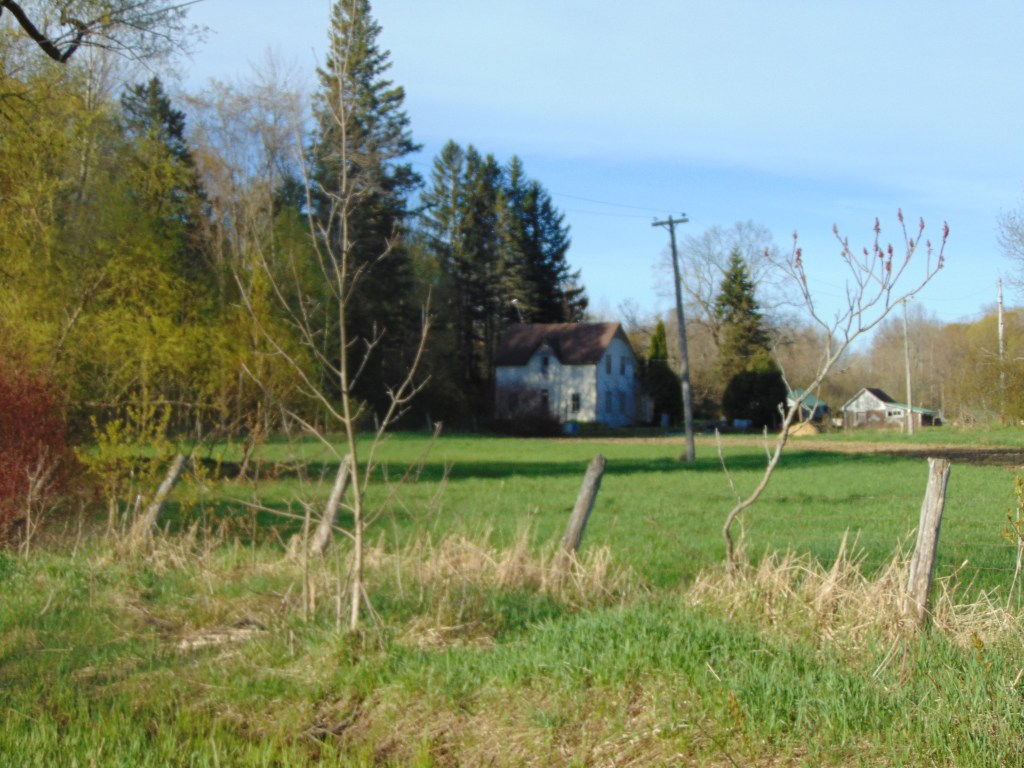
The morning sunrise was shining bright as my dogs and I took our morning walk down Cathedral Drive to the broken remains of my touchstone beside the roadway, at the edge of the woods. I noted again how much of the multi-million-year old igneous rock must have been buried there for thousands years after being left behind by the melting glaciers of the last ice age.

But this morning, with the somewhat delayed spring of 2024 finally taking hold, something else caught my eye: leaves of a vine-like plant growing out of what was left of the moss that had covered the above-ground rock. And then nearby, the prolific spring flower I identify as ‘Dutchmen’s breeches’ gathering around the broken rock. And no sooner did I look, then a small gust of gentle morning wind caught a clump of them as if to draw my attention. I know, I know, that may simply be my fancy – but nevertheless, that’s what it seemed.

And, yes, I may be carried away in calling what I saw “small miracles.” After all a miracle, some might critically say, should be of much greater import: the Creator’s hand reaching down to save one life or many from death, or relief from their suffering.

After all, isn’t that what life can do? Not give up easily, but persist, stubbornly to go on living, to find way in the most unlikely places to create new life.

There is a limit though: thousands of species are being lost, vast natural environments destroyed in the name of economic progress and production, and life-unfriendly poisonous paradigms regarded as stubbornly essential, as if life can survive anything. It cannot, not even in a relatively small, designated government nature reserve that happens to surround my little farm; and an old tractor that probably should be in a museum.

So, yes, surely it is well worth taking a moment to draw attention to life’s ‘small miracles’ in the midst of such an age, while we can.
Reflections on the Universality of Easter

I found myself thinking of Easter a few moments ago, this Good Friday afternoon; and what came to mind is that it’s a holiday that people of many different cultural and religious traditions can honour and appreciate. That’s because it’s about the miracle of life, actual and spiritual, resurgent and ressurected.

I am grateful that as a boy living on a farm near Streetsville many years ago my guardian family attended church every Sunday in town; and, as a result, I became familiar with the story of Jesus, his life as a boy, and as a great spirit and man who I love to this day. And that remains true, even as my spiritual journey into what I often call the Great Mystery continues.

Certain images stand out: I see Jesus going alone at the night into the Garden of Gethsemane, to pray, to ask if perhaps there might be another way. He wept. He loved life. He accepted his fate, the very next day on the Cross.

I hear him cry out, “my God, my God, why has thou forsaken me.” And I feel for Him, my beloved friend. And moments later, when one of the ‘transgressors’ crucified on either side of Jesus speaks harshly to Him, the other comes to His defence, saying, “we receive the due reward of our deeds, but this man has done nothing wrong.” Then that man, feeling that he is unworthy of anything more, asks Jesus, “Lord, remember me when you come into your Kingdom.” Instead, Jesus says, “Truly, I promise you, today you will be with me in paradise.” That is, for me, the most powerful moment in the New Testament, only to be found in St. Luke.

Today I am an elder man, but young at heart, even like the child I was on that Streetsville area farm, now that I have one of my own. The seeds I planted indoors at the west kitchen window have germinated. They will be planted outdoors in one of my three garden plots come warmer weather. I am excited again at the prospect of watching the gardens come alive with new life.

I live, surrounded by nature, in a secluded area on the Saugeen (Bruce) Peninsula called Hope Ness. It is near a precious body of water called Hope Bay, sacred, to those who know it leads to ‘a place of healing’ visited by indigenous people throughout the Great Lakes for thousands of years. And so, I am surrounded by Hope, and the blessings of Mother Earth. I count my blessings every day.

Happy Easter to everyone on this beautiful, little blue-green jewel of a planet, this sacred gift. We are all one family in truth and spirit.

May be an image of collard greens and grass

Like

Comment

Share

A joyful sunrise in the woods

There was a profound stillness in the air this sunrise, mid-March morning as we walked to my prayerful touchstone beside Cathedral Drive, the dogs and I, doing what we do every morning of every day.

But this morning was different in its mysterious way, though perhaps only ‘mysterious’ to certain disconnected mortals; otherwise, I think it’s fair to say there is a great cry of joy gathering and stirring in the woods, as the ‘sweet liqueur’ of life, as Chaucer would say, begins to rise with the sun. Under the still-deep, snow cover that remains, an infinite murmuring of countless awakening creatures, small and large. And above the old pasture across the road, the rising sun has conjured up a fine mist that speaks to how precious this moment is.

Buddy and Sophie in their canine way are well aware and join the celebration, as they run about, stopping here and there to savour the deliciously rich, rising plenitude of refreshed aromas. Ah, the joy of innocence! Whereas the best I can do is write a few, imagined words, take photos of the happy, sunrise woods, and wonder what it must be like to be a tree on a morning such as this.

But that, at least, is something worthy and hopeful after all, the Great Mystery says, by way of consolation.

And, for the moment, I treasure that blessing. It is reason enough to give thanks.

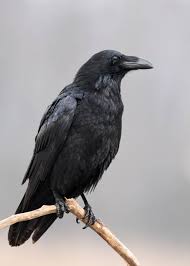
My Ravens

raven3

As the headline suggests, I soon had a welcoming, friendly, attitude toward the mating pair of ravens who found a home in my 125-year-old bank barn a couple of years ago.

The barn was obviously a perfect place for the big, black, intelligent, talkative, playful birds. They came and went through an opening high up on the south side of the barn where a couple of boards had come loose. (For all I know, as smart as they are, they may have soon figured out and engineered the further removal of those boards.)

There was plenty of old, loose and baled hay in the loft; and good places high up in the hand-hewn beams to build their nest. They chose well, where two beams met – one horizontal, the other at an angle. Some time that spring after they first arrived, I had to go into that part of the barn and spotted the remarkably big nest, close to a meter across. I tried to leave them alone as much as possible from then on, not wanting to scare them away. I didn’t have much reason to go there, except to search out some of the few remaining bales of straw for mulching strawberries and potatoes. But after a spring storm there was a barn door to fix and that caused some raven commotion: The nesting couple took refuge in the nearby woods where they loudly complained about the intrusion. I tried to commiserate with them in a comforting tone, with assurances that I meant no harm, that I just had a hopefully one-time-job to do and would soon be gone. No problem, I said. “I’ll just get this here job done and be on my way.”

Continue reading

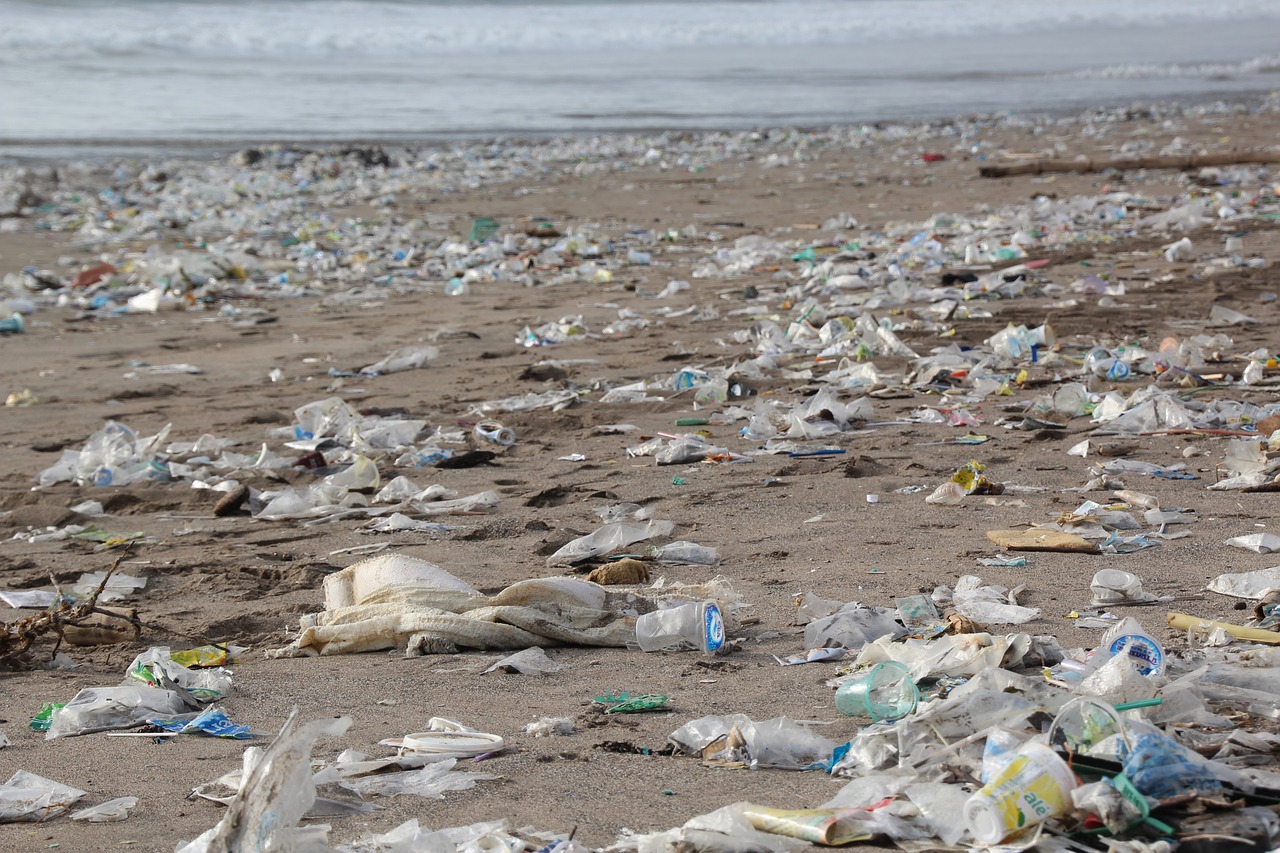
Ontario’s zero-waste plan should not be politically dumped

plastic

A sight that’s becoming all-too-typical around the world

It could be a script for a science fiction movie: scientists discover a previously unknown bacterium that somehow evolved in a plastic recycling plant in Japan. This new organism produces an enzyme that eats plastic in a matter of weeks, reducing it to a reusable resource. Continue reading

Deer in the headlights, and the intelligence of mushrooms

deer

Just after night settled in here – about 6 p.m. in mid-November – I was driving slowly along Cathedral Drive when suddenly my headlights lit up two white-tailed deer a short distance ahead. I had plenty of time to slow down more in case they panicked the wrong way into my van; and time to get a good look at the beautiful creatures as they literally high-tailed it off the road and into the woods. Continue reading

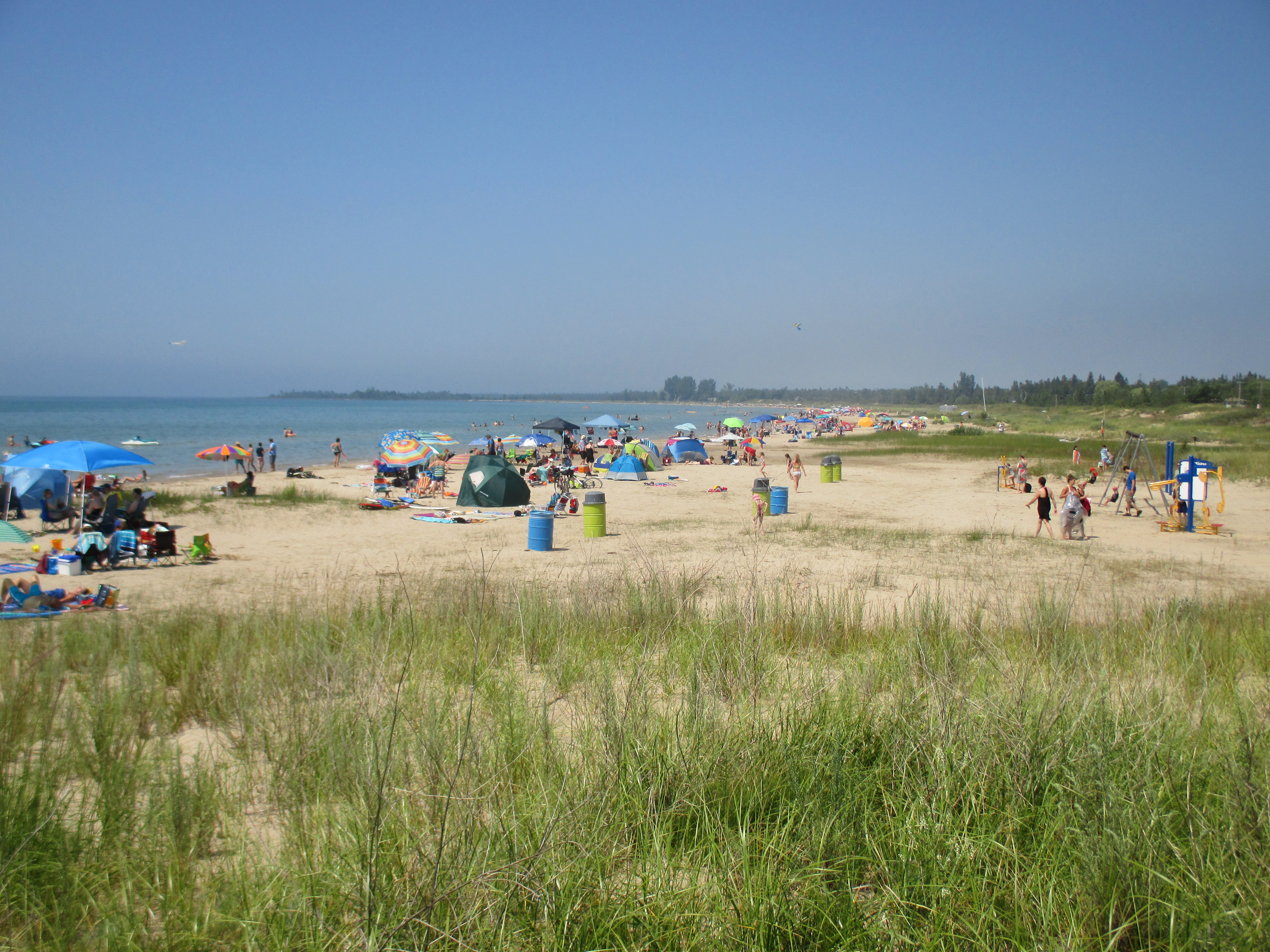
Nature knows best about Sauble Beach

sauble1

Sauble Beach, unraked, early August, 2017

Sauble Beach is located on the western shore of Lake Huron, one of North America’s Great Lakes. It’s a major summer tourist destination in the Province of Ontario, Canada. On a busy summer upwards of 25,000 people will pack the beach and the nearby business community of restaurants,  campgrounds, hundreds of rental cottages and other tourism-oriented businesses.  Most will come from the cities a couple of hours drive south in Ontario. Sauble Beach is one of the biggest tourist destinations in the area often referred to as Grey-Bruce, after the two counties it includes.

That area, and more, is part of the traditional territory of the Saugeen Ojibway Nation, which includes the Chippewas of Nawash First Nation and the Saugeen First Nation. Continue reading

My little climate-change reality

Now, this much is for sure, in the wider world a whole lot of people are having a lot worst experience with climate change than I am here in Hope Ness, southwestern Ontario, Canada.

Hundreds of homes near Great Lakes and St. Lawrence River waterway systems in parts of Ontario and Quebec have flooded in the past week as a result of unusually high rainfall amounts in the the past month; and then on top of that a storm system bringing several days’ more rain to make those matters even worse.

Extreme wet and unseasonably cold weather has also descended as the deep south states in the U.S. where the turbulent weather has already spawned a lot of destructive and deadly tornado activity.

So, I have to put my little climate problem in the proper perspective and count my blessings.

But I’ve been growing vegetables for a lot of years in this area and I’ve never seen anything like this. Continue reading

Francis is a breath of fresh air on climate change

Climate-change issues as they relate to my relatively small garden here on the Bruce Peninsula mean very little indeed compared with what other people in Canada, and around the world, are now facing:

But they do at least make the point that we’re all in this together, that climate change and whatever is causing it is a world-wide reality affecting all of us, and this precious little blue-green jewel of a planet on which we all live and call home. Or should.

Here now in mid-July I walk between my rows of sweet corn that at this point should be much higher by now than it is and worry if we don’t get a good, long spate of normal warm summer weather soon I may not have ripe corn to pick before the first frost. I wonder, is all the work of tilling, planting, and now tending in vain. Continue reading

Lilacs may also fall victim to the emerald ash borer

Don Cipollini, a plant physiology professor at Wright State University, happened to be on a bike path in Yellow Springs, Ohio, last August when he noticed something peculiar about some ornamental trees along the way.

He stopped and had a closer look. What he discovered could have a dramatic and, some might say, heartbreaking effect on the heritage landscape of Grey-Bruce and southern Ontario, much of Canada, and the rest of North America.

Cipollini and other researchers at the university did follow-up work and discovered the emerald ash borer had infested white fringetrees across Ohio. White fringetrees, an increasingly popular ornamental tree across North America, are the closest relative of ash trees. The bad news was published in the Journal of Economic Entomology and widely reported in the news media this week.

How bad?

“Things aren’t looking good for ashes in North America and now other species,” said Cipollini. He said other trees and shrubs in the ash family now need to be watched for ash borer infestations, including lilacs, forsythia, and privet. Continue reading