“May you live in interesting times” is an ancient Chinese curse, made all the more effective, one imagines, by being so nicely understated. The full extent of the catastrophe that might befall the victim is left to their imagination.
Some, perhaps even many, might say we are currently living in the sort of “interesting times” that would meet the requirements of the curse, with real or potential, world-changing catastrophe shaping up or already running amok on several fronts.
Some of it gets plenty of news coverage, more than enough, you might say. The whole world has the proverbial ringside seat to the decline and fall of a great democracy, and the real threat that poses for every living soul on earth, and future generations. Vast news resources, traditional and new, are focussed on one madman’s every troubling word, tweeted or otherwise.
Meanwhile, other urgently important news gets nowhere near the attention it needs and deserves. It appears somewhere below the actual and virtual fold in the headlines for a day or so, before being relegated to the archival back pages, out of mass-public sight, and mind.
That appears to be the routine fate of news reports about the latest studies into the unfolding effects of global warming and climate change. Such studies invariably express an urgent need for the world to take action to stop it from happening, or else “interesting times” shall be the inevitable consequence.
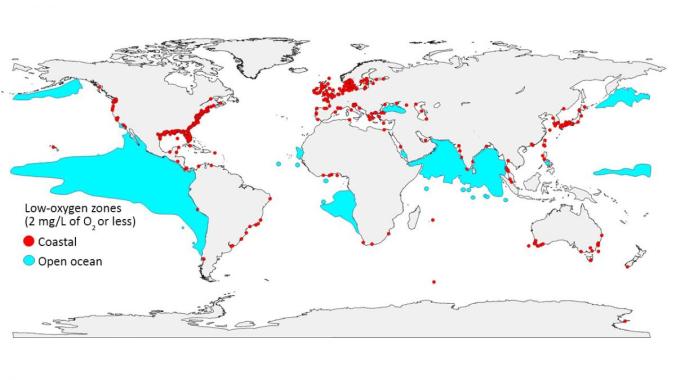
Such was the case again with coverage of the results of an “analysis” of declining oxygen levels in vast areas of the open oceans, as well as coastal areas. It was co-authored by 22 scientists and published early this month in the journal Science. Continue reading →








 Finding Hope Ness